01 What Is a Space Capsule Pod House?
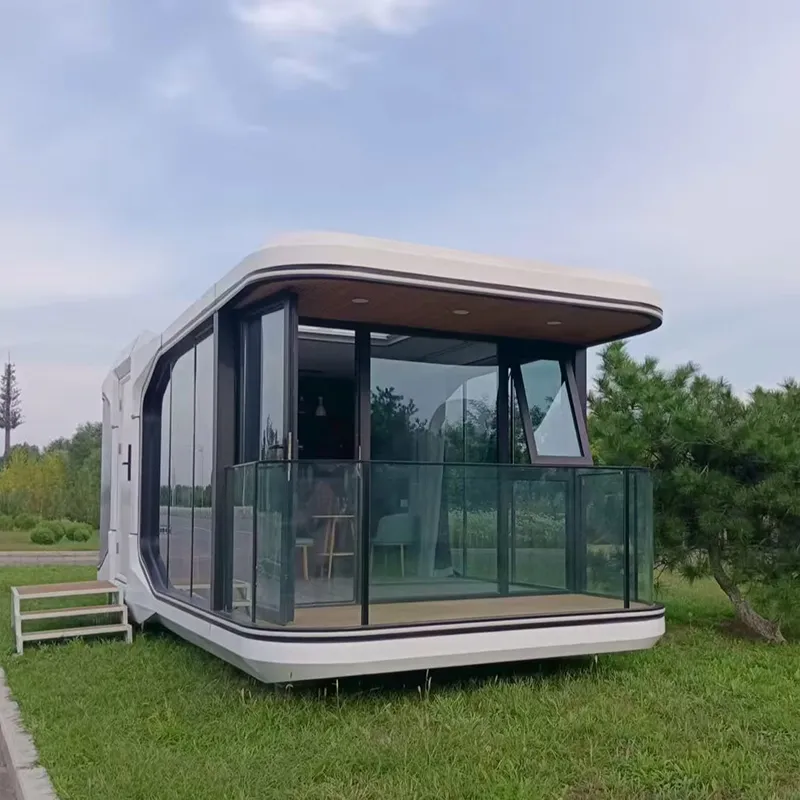
If you've scrolled through Airbnb or Instagram lately, you've probably seen them: sleek, futuristic pods with panoramic glass facades, sitting on a hillside or by a lake. These are space capsule pod houses — fully prefabricated modular living units that ship from China as complete, ready-to-install structures.
They're not tents. They're not shipping containers. Space capsule pods are purpose-built residential units constructed from a galvanized steel frame, insulated sandwich panels (EPS or rockwool), and large aluminum-alloy glass windows. Each unit is a self-contained living space with a bedroom, bathroom, and optional living area — wired, plumbed, and fully finished before it leaves the factory.
The concept originated in China around 2018, initially for high-end glamping resorts and scenic area accommodations. Since then, demand has exploded globally. Today, these pods are being used as boutique hotel rooms, vacation rental units, backyard guest houses (ADUs), remote worker housing, and even permanent tiny homes.
02 Why Importers Are Buying Them Right Now
The global modular construction market is projected to reach $175 billion by 2030, and space capsule pods sit at the intersection of three massive trends:
Trend #1: Experience economy boom. Travelers are paying $150-$400 per night for unique accommodations. A space capsule pod with panoramic mountain views commands premium nightly rates that standard hotel rooms simply can't match. For resort and glamping operators, the unit economics are compelling: at $150/night average rate and 60% occupancy, a $12,000 pod can generate $32,850/year in revenue — paying for itself in under 6 months.
Trend #2: Housing shortage solutions. Cities worldwide are loosening ADU (Accessory Dwelling Unit) regulations. A prefab pod delivered as a turnkey living unit solves the speed and cost problems of traditional construction. No permits for on-site building, no construction delays, no weather dependencies — just site prep and delivery.
Trend #3: Remote work infrastructure. Mining companies, agricultural operations, and remote industrial sites need worker housing fast. Space capsule pods can be deployed in weeks rather than the months or years required for traditional construction.
03 Pricing Breakdown: What You Actually Pay from China
This is where most buyers get confused. The headline price you see on Alibaba ($5,000-$7,000) is almost never the final price. Here's the real cost structure based on verified factory quotes from Guangdong manufacturers:
| Tier | Size (L x W) | Features Included | FOB Price Range |
|---|---|---|---|
| Basic | 6m x 2.4m | Steel frame, insulated panels, basic bathroom, LED lights, standard window | $8,000 - $10,500 |
| Standard | 7m x 3m | Above + panoramic glass facade, upgraded bathroom, flooring, basic furniture | $12,000 - $16,000 |
| Premium | 9m x 3m | Above + full interior design, smart home system, climate control, premium finishes | $18,000 - $22,000 |
| Luxury Custom | Custom | Fully bespoke: custom layout, high-end fixtures, skylight, deck, solar-ready | $23,000 - $28,000+ |
The prices above are FOB (Free On Board) — meaning the pod is loaded onto a ship at a Chinese port at the factory's cost. You are responsible for ocean freight, insurance, import duties, and inland transport to your site. These typically add 15-30% to the total landed cost depending on your destination.
04 Inside the Factory: How These Pods Are Made
The manufacturing process is closer to automotive assembly than traditional construction. Here's what happens on the factory floor:
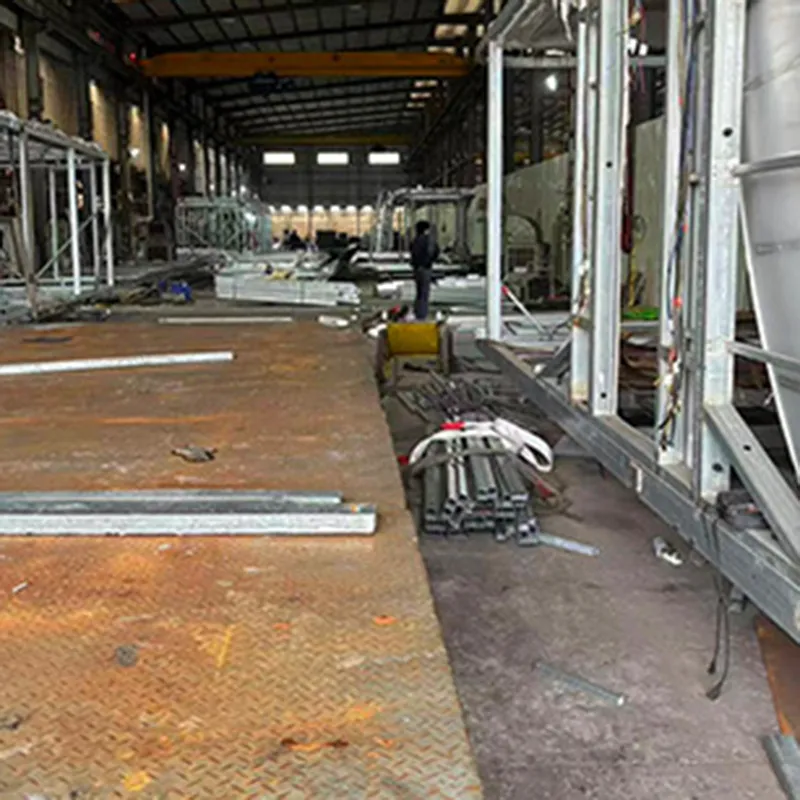
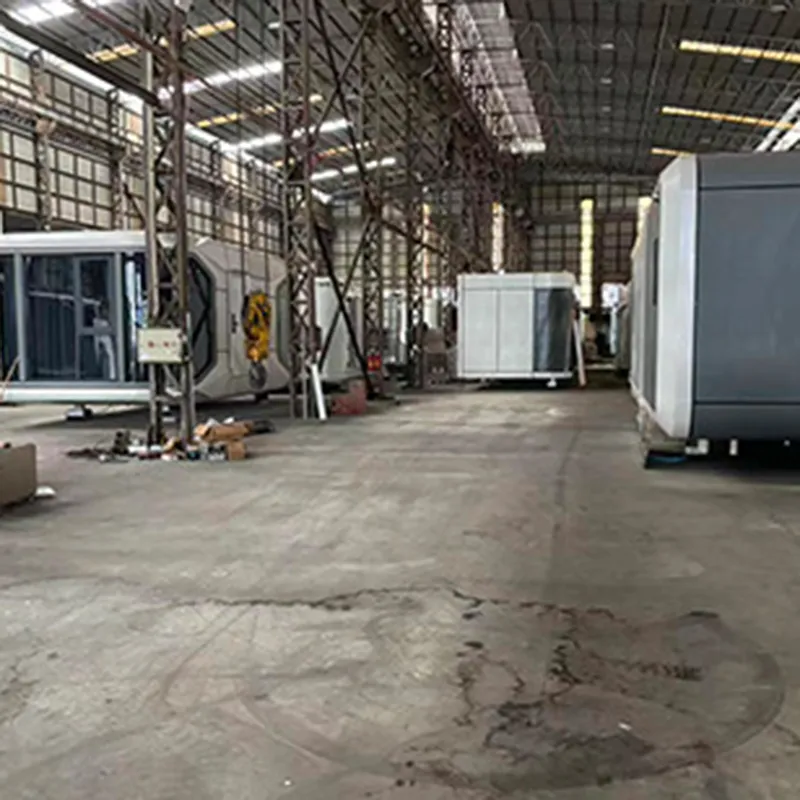
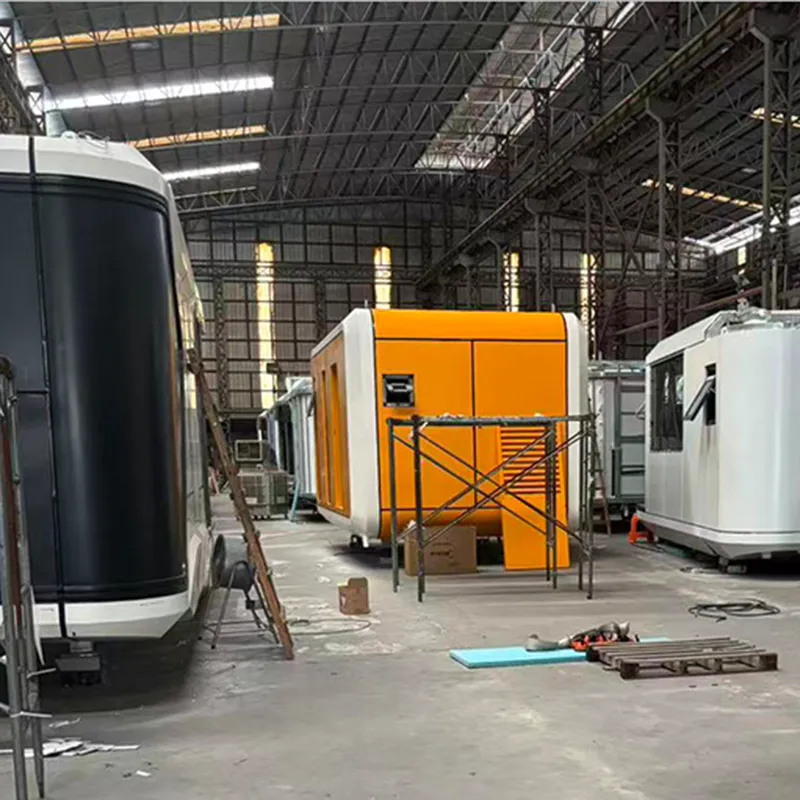
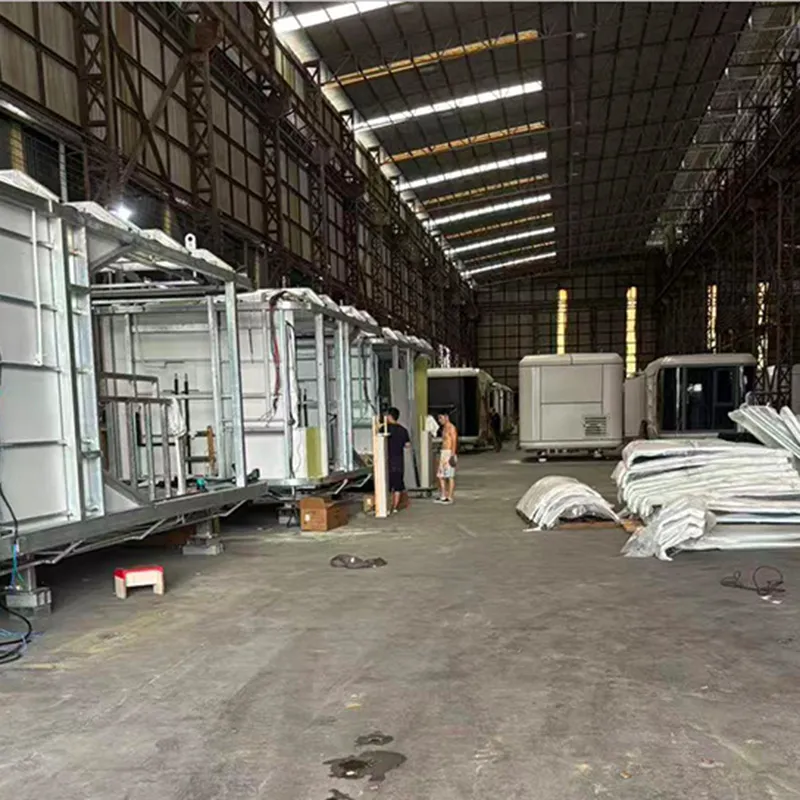
Phase 1: Steel frame fabrication — The galvanized steel chassis and frame are welded in jigs to ensure dimensional accuracy. This is the structural backbone; tolerances are typically within 3mm.
Phase 2: Panel installation — Insulated sandwich panels (EPS foam or mineral rockwool between two metal sheets) are attached to the frame. These provide thermal insulation, sound dampening, and weather resistance. Panels are cut to size with CNC precision.
Phase 3: Interior finishing — This is where the pod becomes a home. Flooring, wall panels, bathroom fixtures, kitchenette (if specified), lighting, and electrical wiring are all installed in the factory. Every pod is tested for electrical safety and plumbing leaks before it leaves.
Phase 4: Glass facade — The signature panoramic window is installed last. Tempered, double-glazed glass with aluminum alloy framing. This is both the visual centerpiece and the most fragile component during shipping.
Phase 5: QC and packaging — The finished pod undergoes a full inspection: structural integrity, electrical, plumbing, waterproofing, and cosmetic finish. It is then wrapped in protective film, crated, and loaded into a shipping container.
05 Customization Options — This Is Where the Money Is
Most manufacturers offer a base model, but the real value — and what differentiates your property from competitors — is in customization. Here are the most common options importers request:
- Exterior color — White, black, silver, or custom RAL colors. Matte finishes are trending in 2026.
- Interior layout — Open studio vs. partitioned bedroom. Bathroom placement. Kitchenette or no kitchenette.
- Flooring — Laminate (standard), engineered wood, or tile. Underfloor heating available as an upgrade.
- Furniture package — Bed frame, nightstand, sofa, dining table, chairs. Custom upholstery available.
- Smart home integration — Voice-controlled lighting, motorized curtains, smart thermostat, keyless entry.
- Climate control — Split AC unit, electric heating, or full HVAC. Solar-ready electrical system optional.
- Bathroom upgrades — Rain shower, smart toilet, heated towel rack, premium tile.
- Exterior deck — Attached wooden or composite deck platform, delivered as a modular kit.
- Branding — Custom exterior decals, logo etching on glass, branded interior elements.
One of our clients in Australia ordered 12 pods with a custom layout that included a small kitchenette and fold-out sofa bed, allowing each unit to sleep 4. The customization added roughly $2,800 per unit but enabled them to charge family rates 40% higher than competitors using standard configurations.
06 Shipping & Logistics: Container, Freight, and Customs
Space capsule pods are oversized cargo. This is not like shipping a pallet of phone cases. Here's what you need to know:
Container types: Most pods ship via 40-foot High Cube (40HQ) containers. A standard 7m x 3m pod will typically fit in one 40HQ. Smaller pods (6m x 2.4m) may fit two per 40HQ if stacked. Some manufacturers offer flat-rack containers for pods that exceed standard container dimensions (9m+ length).
Port of origin: Most space capsule factories are in Guangdong province (Foshan, Guangzhou, Shenzhen areas). Pods typically ship from Nansha (Guangzhou), Shekou (Shenzhen), or Yantian ports.
Freight cost estimate (per 40HQ container):
- To US West Coast: $2,800 - $4,200
- To US East Coast: $3,800 - $5,500
- To Europe (Rotterdam/Hamburg): $3,200 - $4,800
- To Australia: $2,200 - $3,500
- To Middle East (Jebel Ali): $2,500 - $3,800
Customs classification: Most countries classify prefab buildings under HS Code 9406. Import duties vary significantly by country (0-25%). Always check with a customs broker before ordering. Some countries offer reduced duties for temporary or portable structures.
Site preparation: Before your pod arrives, you need: (1) a leveled foundation pad (concrete slab or compacted gravel), (2) utility connections brought to the pad (water, electricity, sewage), (3) crane access for unloading. The pod itself includes connection points for all utilities. Installation typically takes 1-3 days with a crew of 2-3 people plus crane operator.
07 How to Verify a Space Capsule Manufacturer
A $15,000+ purchase deserves due diligence. Here's what to check before placing an order:
1. Factory visit (or proxy inspection). Pictures on Alibaba prove nothing. We've seen "factories" that are actually trading companies subcontracting to the real manufacturer. A physical inspection confirms: real production capacity, quality of workmanship on pods in progress, and whether the facility matches the photos.
2. Export history. Ask for references and photos of past exports — specifically, pods loaded into containers and marked for specific countries. A manufacturer who has successfully shipped to your region knows the customs requirements and packaging standards.
3. Certification. CE marking is the minimum for European imports. For structural and electrical safety, ask to see the specific test reports, not just the certificate. Some factories hold ISO 9001 quality management certification — a plus but not a guarantee of quality.
4. Warranty terms. Standard warranty for space capsule pods is 1-3 years on structure and 1 year on interior finishes, electrical, and plumbing. Get this in writing before payment. Understand what's covered (manufacturing defects vs. installation damage) and how claims are handled from overseas.
5. Payment terms. Standard: 30% deposit to start production, 70% before shipment after QC inspection. Never pay 100% upfront. Use bank transfer (T/T), letter of credit (L/C) for larger orders, or trade assurance platforms where available.
08 Why Use a Sourcing Agent for Such a Large Purchase
When you're spending $15,000-$100,000+ on modular housing units, the 5-8% sourcing agent fee isn't an expense — it's insurance. Here's what a good agent does that you can't do from overseas:
- Factory verification: We physically visit the factory, inspect production capacity, and confirm the operation is legitimate — not a trading company posing as a manufacturer.
- Price negotiation: We know the real factory costs because we source from these regions daily. A 10-15% price reduction on a $100,000 order more than covers our fee.
- Quality control: We inspect your pods at multiple stages — frame welding, interior finishing, final QC before crating. Problems caught in the factory cost nothing to fix. Problems discovered after shipping cost thousands.
- Logistics coordination: Container booking, customs documentation, and coordination between factory, freight forwarder, and your receiving agent. One mistake in paperwork can delay your shipment by weeks.
- Dispute resolution: If something goes wrong — production delays, quality issues, shipping damage — having a local representative who speaks the language and knows the legal system is invaluable.
We've sourced modular housing products for clients in Australia, the US, and the Middle East. Every project has its unique requirements, and we manage the process end-to-end so you can focus on your business, not on supply chain problems.
Ready to Source Your Space Capsule Pods?
Tell us your requirements — quantity, size, budget, destination — and we'll connect you with verified factories and provide a detailed quotation within 24 hours.
Questions? Contact Karsa directly on WhatsApp: +86 198 9848 4442 or email longxin3639@gmail.com