
In February 2026 the US Supreme Court struck down a set of tariffs, and plenty of small importers read the headline as the end of the China tariff problem. If that was you, look at your last customs invoice before celebrating. The duty you pay on Chinese goods probably did not drop, because the tariffs that fell were IEEPA tariffs (the International Emergency Economic Powers Act). The Section 301 tariffs on Chinese goods were never among them.
That confusion lands on real desks. A quote arrives with a duty line nobody can explain. Headlines say tariffs died. A supplier pushes for a deposit before a deadline you have never heard of. This guide answers the four questions that decide your order: which list your product is on, which rate applies, whether an exclusion covers it, and which date decides what you pay.
I am Karsa, a sourcing agent based in Zhaoqing, Guangdong; The company is registered in Zhongshan, which is why we present ourselves as Zhaoqing & Zhongshan. I work the China side of your paperwork, not your customs entry, and I will show you exactly where that line sits. As of November 2026 there is fresh news to get right: on November 6 2026 the US Trade Representative (USTR) extended all 178 Section 301 exclusions through January 9 2027, and the dates that follow from that are the reason this guide exists. If the whole import journey is new to you, start with the complete first-import walkthrough; this page handles the Section 301 layer.
01 The Quick Answer: What Section 301 Means for Your Next Order
The one-paragraph answer
As of November 2026, the short version: Section 301 is an additional duty stacked on top of the normal duty for goods of Chinese origin. Most covered products pay an extra 7.5 or 25 percent, strategic products pay more after the 2024 review, and all 178 exclusions (product lines where the 301 duty is temporarily lifted) run through January 9 2027. This is the layer of US tariff policy that survived the February 2026 ruling intact.
What actually decides what you pay
Three things, in order: the product's HTS line (its classification in the Harmonized Tariff Schedule, precise to eight digits), the list or review rate attached to that line, and the date the goods enter the United States for consumption. Nothing else decides it - not the ship date, not a supplier's promise, not the headline you read last week.
What this guide covers and what our tariff guide owns
The landed cost arithmetic and the legal ways to reduce tariff exposure live in our general China tariff guide. This page owns the Section 301 layer: the lists, the rates, the exclusions, and the dates.
Who I am and where my work stops
Tariffs are customs-broker territory. I am a sourcing agent, not a licensed customs broker: I do not classify products and I do not file entries. My part is checking the factory's HS information (the product classification the factory declares) and keeping the China-side documents consistent, so your broker is not fighting bad paper. The classification decision, the customs entry, and any exclusion claim belong to you and your licensed broker. This is experience, not legal or tax advice, and your broker confirms anything that decides money.
02 What Section 301 Is, and Why It Now Leads US Tariff Policy on China
The law and the investigation
Section 301 is a provision of the Trade Act of 1974 that lets USTR act against foreign trade practices it finds unreasonable or discriminatory. In 2017 USTR opened an investigation into China's technology transfer and intellectual property practices, and the finding that came out of it authorized the tariff action that followed. That legal vehicle matters to a small buyer because it decides how a duty can appear and how it can disappear: an investigation-backed action cannot be switched off by a court ruling aimed at a different law, and it carries no built-in expiry date.
The action in plain terms
From July 2018, four lists of Chinese goods covering roughly 370 billion US dollars of trade were taxed at 7.5 to 25 percent. That structure is still the base layer of what a small importer pays today, whether that importer is a wholesaler, a shop owner, or an Amazon seller.
What the February 2026 ruling changed, and what it did not
On February 20 2026 the Supreme Court ruled 6-3 in Learning Resources, Inc. v. Trump that IEEPA does not authorize the President to impose tariffs. US Customs and Border Protection (CBP) stopped collecting the IEEPA-based tariffs on February 24 2026, and refund claims covering an estimated 166 billion US dollars or more, collected from over 330,000 importers, remain unresolved. What the ruling did not touch is the part you pay: Section 301 rests on a different statute with its own investigation process. If you are the buyer who heard the ruling killed the tariffs and then watched your duty stay put, that is the whole answer: two different laws, two different outcomes, and an invoice that changed under only one of them.
What came after
The months since have kept US trade policy busy. Section 122 (a temporary balance-of-payments authority in the same trade law) raised a global tariff from 10 percent to 15 percent, but it carried a 150-day statutory cap and expired July 24 2026. On July 23 2026, 10 or 12.5 percent tariffs were imposed on 60 economies following USTR's final Section 301 determination on forced-labor import bans. A separate Section 301 investigation into structural excess capacity, covering 16 economies, took comments due April 15 2026 and held hearings from May 5 2026, and it is ongoing. Section 232 sector tariffs (the national-security authorities) continue. The pattern behind the noise is plain: Section 301 requires an investigation process but has no statutory expiry, so it has become the core legal vehicle of US tariff policy in 2026.
The average effective tariff rate, in one sentence
For a sense of scale, nothing more: estimates put the average effective US tariff rate around 12 percent as of mid-2026.
03 The Four Lists and Their Rates
List by list, in plain language
Which list a product sits on came from the order in which the action rolled out, and the character of each differs. The early lists aimed mostly at industrial inputs and capital goods. The third list is the broad one, covering a wide range of consumer and commercial goods; for a small buyer importing everyday products, that is usually the list that matters. The fourth covers consumer goods. I describe character, not counts, because product counts per list change with tariff schedule revisions and go stale fast. The line-by-line answer is your broker's.
The rates
The short version, because this is what people search for:
| List | Additional rate |
|---|---|
| Lists 1 to 3 | 25 percent |
| List 4A | 7.5 percent |
List 4A is the small-buyer list: if you import finished consumer goods, this is the rate most often attached.
What the 301 duty stacks on top of
Section 301 is additional to the normal duty for your product, not a replacement for it: the regular rate on the HTS line still applies, then the 301 add-on, then whatever other measures attach. The arithmetic of adding it all up, with worked examples, is the landed cost arithmetic in our China tariff guide.
04 The 2024 Review Increases: Which Strategic Products Pay More
Why a review happened at all
Section 301 actions get a four-year review. The 2022 review of the China action produced a 2024 decision, announced May 14 2024 and finalized Sept 13 2024, that raised rates on strategic products in phases running 2024 to 2026. If your rate is higher than the list rate your broker mentioned, this is usually why.
The three effective dates and the increases
The full table, built from the action itself. If your product is in one of these groups, the review rate replaces the list rate:
| Effective date | Product group | Rate change |
|---|---|---|
| From Sept 27 2024 | Electric vehicles | 25 to 100 percent |
| From Sept 27 2024 | Syringes and needles | 0 to 50 percent |
| From Sept 27 2024 | Solar cells | 25 to 50 percent |
| From Sept 27 2024 | Steel and aluminum | 0-7.5 to 25 percent |
| From Sept 27 2024 | EV lithium batteries | 7.5 to 25 percent |
| From Sept 27 2024 | Port cranes | 0 to 25 percent |
| From Sept 27 2024 | Masks and respirators | 0-7.5 to 25 percent |
| From Sept 27 2024 | Certain critical minerals | To 25 percent |
| From Jan 1 2025 | Semiconductors, adding polysilicon and silicon wafers | 25 to 50 percent |
| From Jan 1 2025 | Medical gloves | To 25 percent |
| From Jan 1 2026 | Non-EV lithium batteries | 7.5 to 25 percent |
| From Jan 1 2026 | Natural graphite and permanent magnets | 0 to 25 percent |
| From Jan 1 2026 | Medical gloves | To 100 percent |
| From Jan 1 2026 | Masks | To 50 percent |
What this means for a small buyer
If your product is in one of these categories, the review rate applies, not the list rate, and your broker confirms it line by line, because a product family name is not a classification. For what a higher rate does to a first order, budgeting a first import order is the page that frames that decision.
05 The 178 Exclusions and the January 9 2027 Deadline
As of November 2026, this is the freshest layer of the whole subject, and the reason a dated guide beats a stale one.
What USTR announced on November 6 2026
On November 6 2026 USTR announced that all 178 Section 301 exclusions were extended, effective 00:01 ET on November 10 2026 through 23:59 ET on January 9 2027. Without the extension, the covered items would have reverted to 7.5 to 25 percent on November 10 2026. That is the fact. What it means for your order is next.
The 164 plus 14 split
The 178 break into two groups. Annex A's 164 items are industrial and medical intermediates: pump parts, compressors, heat exchangers, AC/DC motors, PCBs and circuit assemblies, ECG electrodes, blood pressure monitors, pulse oximeters, PET/CT and radiotherapy system parts, chemicals, infant sleep sacks, safety goggles, sewing machines, and bicycle trailers. The other 14 are solar manufacturing equipment items, which means machinery for making solar products, not the solar products themselves. "Intermediates" is the word to notice in all of this: parts, components, and equipment that go into making other things, which is exactly why finished consumer goods sit outside the relief.
What is not on the list, stated plainly
Three absences matter to small buyers: consumer electronics finished goods are not on the list, home appliance finished goods are not on the list, and solar cells and modules as products are not covered. If you import finished consumer electronics or finished appliances, this extension is not your relief.
The shorter window, stated honestly
The current extension runs about two months, shorter than the previous one-year arrangement. That is everything I can say about it as fact.
What happens after January 9 2027
Nobody knows yet, and I will not guess. What a small buyer can do is plan both cases. In one, the window is extended again and nothing changes in your arithmetic. In the other, it is not, in which case goods entered after January 10 2027 face resumed 301 tariffs. In the second case the entry-date rule in the next section is what your order calendar gets built around. Any page that tells you which case comes next is selling you something.
06 The Entry-Date Rule: Why Your Ship Date Does Not Decide Your Duty
Which date counts
Exclusion eligibility is judged by the date the goods enter the US for consumption - the entry release date - not the ship date, the departure date, or the bill of lading date. An exclusion lives on the customs entry, and the entry happens when the goods arrive and are released, well after the container leaves the factory. This is the rule that catches out buyers who planned around a ship date.
The two boundaries
Two dates, straight from the extension: goods entered after November 10 2026 qualify under the extension; goods entered after January 10 2027 face resumed 301 tariffs unless extended again. The word doing the work in both lines is "entered".
Bonded warehouse goods
Goods sitting in a bonded warehouse are judged by the withdrawal-for-consumption date - the day they leave the warehouse for the US market - not the day they arrived. The warehouse strategy itself belongs to our general tariff guide; here the point is only that the same entry logic runs the clock.
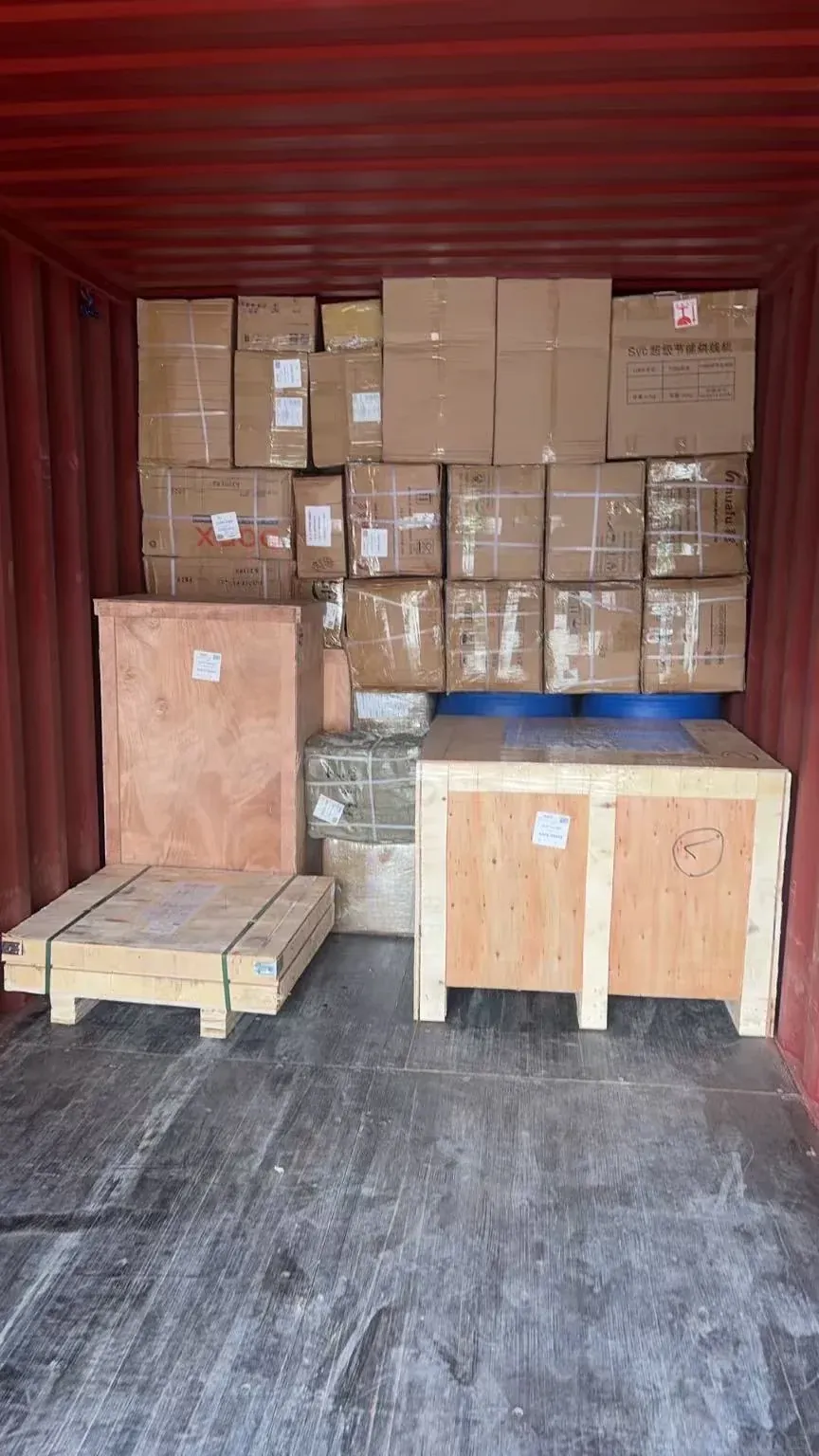
A loaded container - its entry date is already fixed by the calendar.
Why a container on the water is not a decision
Production time plus transit time puts the entry date weeks after the ship date, so a container already on the water has no choices left: its entry date is set by the calendar. The plan gets built backwards from the entry date, not forwards from the ship date. This is experience, not legal or tax advice; the entry date on your specific shipment is your broker's call. For the transit side of that arithmetic, sea freight timelines from China covers the realistic windows.
07 Frequently Asked Questions
What is a Section 301 tariff, exactly?
It is an additional duty the US Trade Representative places on goods of Chinese origin, stacked on top of the normal duty for your product. It began in July 2018 after a 2017 USTR investigation into technology transfer and intellectual property practices. Most covered goods pay an extra 7.5 or 25 percent, and strategic products pay more after the 2024 review. Your licensed customs broker confirms the rate for your specific line.
How do I check whether my product has a Section 301 tariff?
Start from the 8-digit HTS line, not the supplier's 6-digit code. Take it from your broker or classify it on the official HTS site, then enter it in the USTR's Section 301 product search page, which shows the list, the action, and the additional rate. If your product has no confirmed 8-digit line yet, ask your broker before you order - the rate, an exclusion, and the entry timing all depend on it.
Do the 178 exclusions apply to my goods, and until when?
All 178 exclusions run through 23:59 ET on January 9 2027. They cover 164 industrial and medical intermediates, from pump parts and motors to ECG electrodes and blood pressure monitors, plus 14 solar manufacturing equipment items. Consumer electronics and home appliance finished goods are not on the list, and neither are solar cells and modules as products. Your broker checks the exact line and claims the exclusion on the entry.
My container ships before the deadline. Am I safe?
Not necessarily. Exclusion eligibility is judged by the date the goods enter the US for consumption - the entry release date - not the ship date, departure date, or bill of lading date. Goods entered after November 10 2026 qualify under the extension; goods entered after January 10 2027 face resumed 301 tariffs unless extended again. Goods in a bonded warehouse are judged by the withdrawal-for-consumption date.
Did the Supreme Court ruling remove my China tariffs?
No. The February 20 2026 ruling struck down only the IEEPA-based tariffs; CBP stopped collecting those on February 24 2026, and refund claims for an estimated 166 billion dollars or more remain unresolved. Section 301 tariffs were untouched, and because 301 requires an investigation process but has no statutory expiry, it is now the core legal vehicle of US tariff policy on China.
Can you classify my product and tell me my tariff rate?
No, and I will not pretend to. The classification decision and the customs entry belong to you and your licensed customs broker. What I do on the China side is check the factory's HS information, keep the invoice, packing list, and shipping documents consistent with it, and hand your broker a clean paper trail. This is experience, not legal or tax advice; confirm your rate with your broker before you order.
08 Where This Leaves You: Check, Time, and Verify
The check, step by step
USTR's own method, in four moves:
- Get the 8-digit HTS line for your product, from your broker or from the official tariff schedule site. A supplier's 6-digit code is not enough: the 301 lists attach at the 8-digit level.
- Enter that line in the USTR Section 301 product search page, which returns the action, the subheading description, and the additional duty rate.
- Read which list or review increase attaches, and whether an exclusion covers the line.
- Have your licensed customs broker confirm before you commit money. If you do not know the line at all, USTR's own advice is to contact your supplier, your distributor, or your customs broker.
What I check on the China side, and what your broker owns
On my side of the ocean: the factory's HS information, checked against what you are actually ordering; the invoice, the packing list, and the shipping documents kept consistent with it; a clean paper trail so the classification is not fighting bad paper. The documents your broker will need at entry are listed in our customs documents checklist. What is not mine: the classification decision, the customs entry, and the exclusion claim. Those belong to you and your licensed broker.
Timing an order without predicting anything
Three habits replace prediction. Calendar the entry date, not the ship date. Plan both cases for the window, and know what each does to your order. Ask your broker to confirm the current status before the balance payment, not after it. If the numbers make a first order marginal, your first-import budget frames the go-or-wait call. And before treating origin-shifting as the answer, check your 301 line first: whether shifting origin makes sense for your product is a separate question, and some lines carry no 301 duty at all.
Recap in five lines, and what to do next
Five lines to keep:
- Section 301 is an additional duty on Chinese-origin goods, and it did not fall with the February 2026 ruling.
- Your rate comes from the HTS line, the list or review increase attached to it, and the entry date.
- All 178 exclusions run through January 9 2027; nobody knows what follows.
- The entry date, not the ship date, decides exclusion eligibility.
- Your broker confirms the line and files the entry; I keep the China-side paper consistent.
Send me the product, the quantity, and the destination on WhatsApp at +86 19898484442, or through the contact form, and I will check the factory-side information and hand your broker a clean pack. That work is part of our China buying agent service, with a commission of 5% to 15% of the order value, set by order complexity and order size. If your line carries no 301 duty at all, I will tell you that too.

Karsa has been helping e-commerce sellers and businesses source products from China since 2016, serving clients from 23+ countries.
 WhatsApp Karsa
Find Karsa on Social Media
Follow for sourcing tips, factory insights, and product updates from China.