
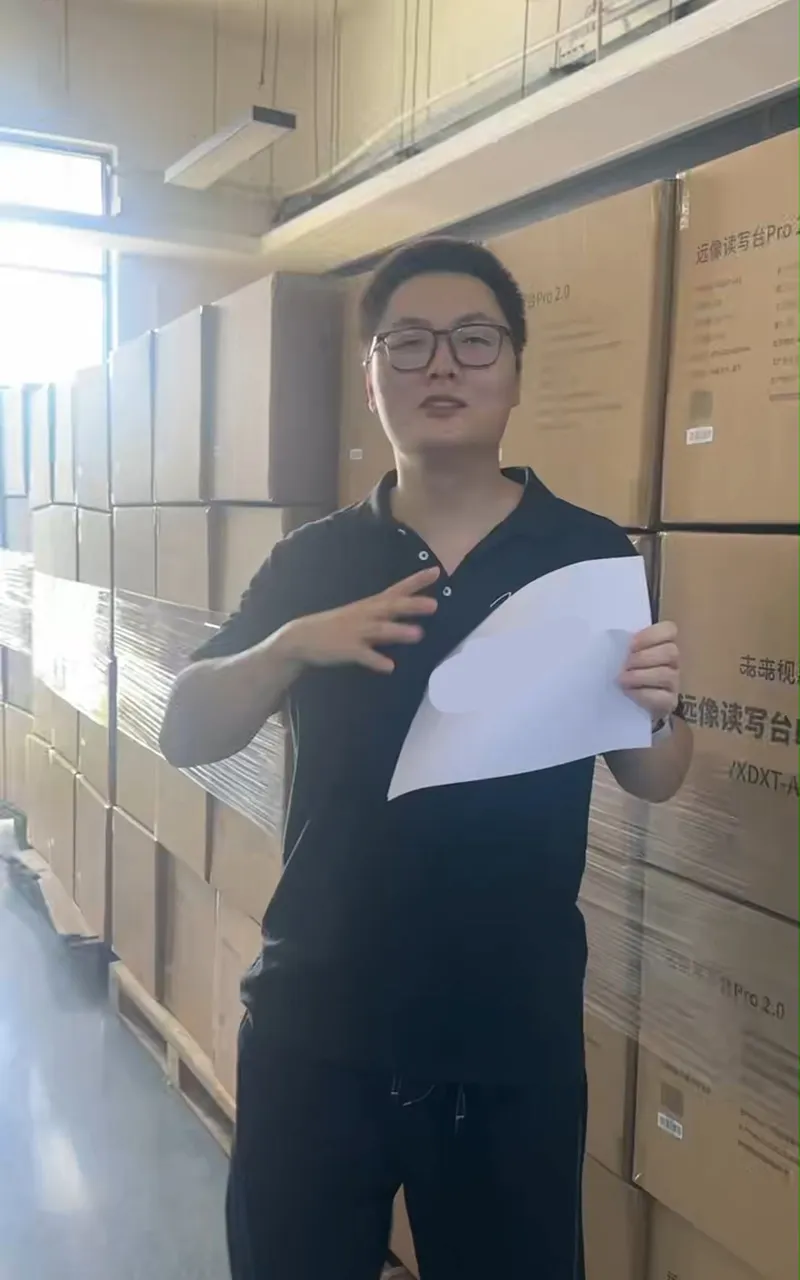
Who am I? I am Karsa. Why do you need me? Why not just go straight to the factory?
I hear this on almost every first call, and it is a fair question. If a factory in Shenzhen can sell you phone cases directly, why would you pay someone in the middle? If you have read anything about importing from China, you have probably been told to cut out the middleman and buy direct.
Here is my straight answer: because one purchase order is almost never one factory.
A normal order pulls in several factories at the same time. You are rarely buying from a single supplier - you are coordinating many of them at once. And when one shipment has to come from several factories, somebody has to chase every one of them for production updates, inspect the finished goods, run quality control, and book the shipping.
That somebody can be you. But then you are contacting factories one by one, comparing quotes one by one, and chasing late orders one by one. It eats your time. And you still have no way to know whether the factory is telling you the truth.
That is before you even get to the harder question: did you actually find a factory, or did you find a trading company reselling to you at a markup?
Working with me does not add cost to your order. It saves your time, and it removes the hidden costs - the delays you never saw coming, the quality problems found after the container is loaded, the supplier who tells you what you want to hear instead of what is really happening.
What do you get? You get one person in China whose only job is to get your order done. I supervise the whole process and handle everything that comes up in between. And if something does go wrong, you come to me. You are not left chasing a factory that keeps giving you the runaround.
Below I break that down properly, including the part most agents will never tell you: the situations where you genuinely do not need one.
01 The Question Behind the Question
When a buyer asks "why not go direct", they are usually asking one of three things.
The first is about money. Is the agent adding a layer of cost I can avoid? That is a reasonable worry and I answer it directly below.
The second is about control. If I talk to the factory myself, nothing gets lost in translation, right? In practice the opposite is usually true, because the factory salesperson you message on a platform is often not the person running your production line.
The third is about trust. Can I trust this stranger in China more than I trust a factory with a verified badge? Also reasonable. The honest answer is that you should not trust either one blindly - you should verify, and verification is much easier from inside the country than from a laptop eight time zones away.
All three come down to the same thing: what actually happens between the moment you send money and the moment a container leaves the port. So let us look at that.
02 One Order, Five Factories: What a Real Purchase Order Looks Like
New buyers imagine one product, one factory, one invoice. That almost never survives contact with a real order.
Here is what a typical first order looks like. A distributor wants a phone accessory starter kit:
- Phone cases: factory A, MOQ 500 pcs per colour
- USB-C cables: factory B, MOQ 1,000 pcs
- Wireless chargers: factory C, MOQ 500 pcs
- Retail packaging and inserts: factory D, MOQ 2,000 sets
- Barcode labels and poly bags: factory E, MOQ 5,000 pcs
Five suppliers, five sets of MOQs, five payment terms, five production schedules. None of them know the others exist. None of them care about your container booking.
Now multiply that by the messaging. Every quote revision is a round of messages. Every "when will it be ready" is another round. If you are doing this across a time difference, a simple question can cost you 24 hours per exchange. I have watched buyers spend three weeks on what should have been a four-day quoting cycle, purely on waiting.
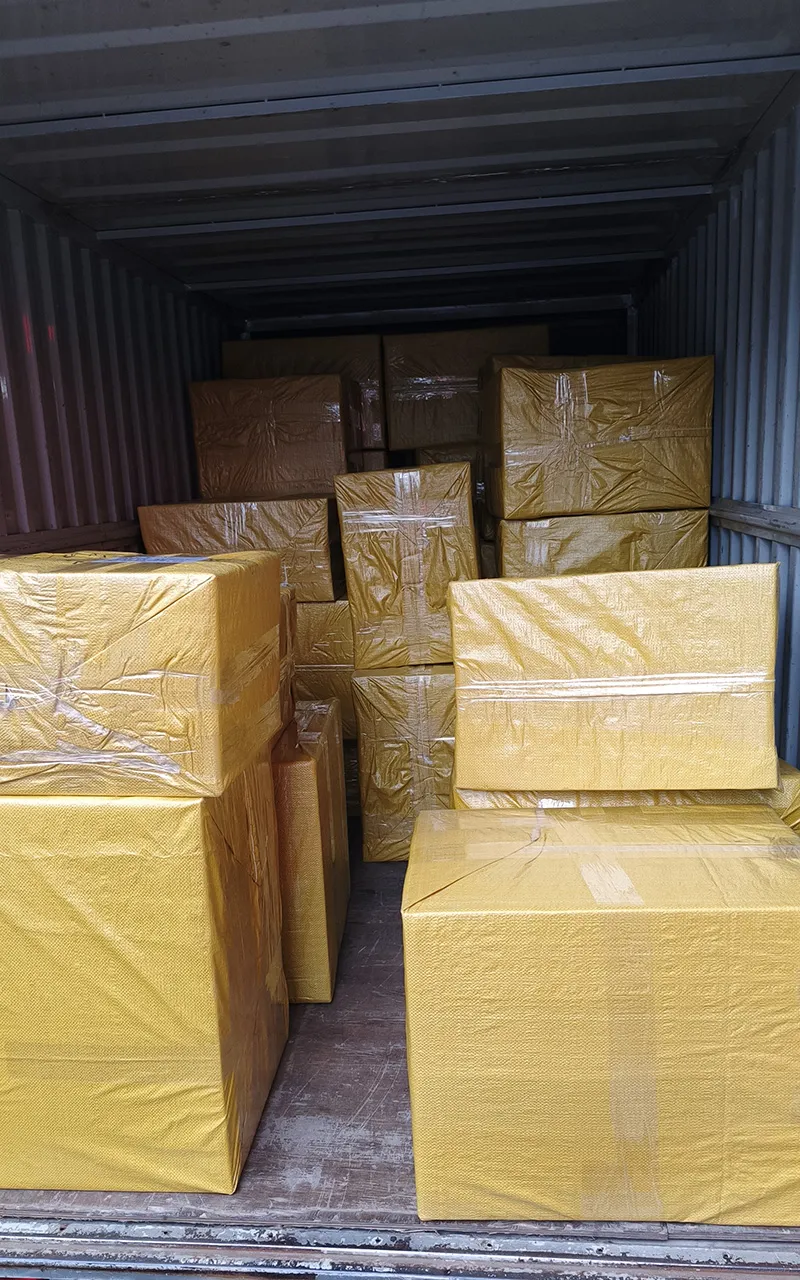
Five suppliers, one container. Staging and re-checking happen at our warehouse before the truck arrives.
03 Why the Slowest Factory Sets Your Ship Date
This is the part that surprises people. Your container does not ship when four out of five suppliers are ready. It ships when all five are ready.
Factory B finishes in 15 days. Factory C finishes in 18 days. Factory D, the packaging supplier, is running another client's job first and takes 26 days. Your ship date is now 26 days, and you paid air freight rates on a schedule set by a cardboard box supplier.
Worse, packaging is usually the last thing ordered because it is the last thing designed. By the time factory D tells you they need an extra week, your cases are already sitting in a warehouse accruing storage.
When I run an order, I sequence it backwards from the ship date. Packaging gets locked first, not last, because it has the longest lead time and the most revision cycles. Then I book the container only once every supplier has confirmed a date they can actually hit, not a date they hope to hit.
That is not clever sourcing. It is just arithmetic, and it is very hard to do from outside the country when every answer you get is filtered through a salesperson who wants to sound optimistic.
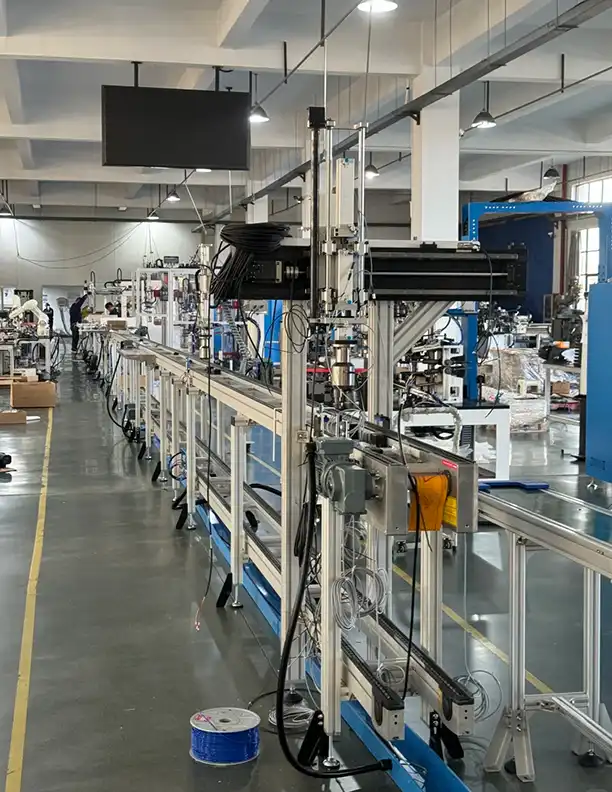
The only reliable way to know you found a factory is to see the line running.
04 The Listing Does Not Tell You Who You Are Buying From
Here is the harder problem, and it has nothing to do with logistics.
A large share of the "manufacturers" on the big B2B platforms are trading companies. Some are excellent. Some are honest about what they are. Many are not.
You will not see the difference on a product listing. The photos are the same. The certificates are the same. The price is often similar. You find out when something goes wrong and you ask for a production change, and the person you are messaging has to "check with the factory" - because they are not the factory.
Working with a trading company is not automatically bad. They can consolidate, they often speak better English, and for small orders they may be your only option. The problem is paying factory-direct prices for what is actually a reseller's service, and having no idea where your goods are really made.
How I check is boring and effective: I ask for the business licence and match the registered address to the production address. I ask for a video call from the production floor at a time I choose, not a time they choose. For orders above a certain size, I visit. I am based in Zhaoqing, in the middle of Guangdong's manufacturing belt, so a factory visit for me is usually a half-day trip, not a flight.
Anyone can claim to be a factory. Very few will do a live walk-through of their own production line on short notice.
05 What I Actually Do While Your Order Is Running
Buyers sometimes picture a sourcing agent as someone who introduces a factory and then disappears until commission day. Let me be specific about the middle of the process, because that is where the value is.
- Week 1 to 2: lock specifications in writing, including materials, tolerances, colours, and packaging artwork. Most disputes trace back to something that was "understood" but never written down.
- Before production: approve a pre-production sample and keep one sealed as the reference. When the bulk order arrives, you compare against that sample, not against a photo.
- During production: check in at the halfway point, not just at the end. Problems found at 50 percent are fixable. Problems found at 100 percent are a negotiation.
- Before loading: inspect. AQL sampling, carton drop tests, barcode scans, quantity counts. I do this myself or with an inspector I have used before, not someone the factory recommends.
- Before payment: only release the balance after you have seen the inspection report with photos and video. This single rule solves most payment disputes.
- Consolidation: goods from several factories arrive at our warehouse, get checked, repacked if needed, and loaded into one container. We include free storage for a period so suppliers can deliver on their own schedules without holding your shipment hostage.
Notice how little of that is "finding a factory". Finding a factory is maybe ten percent of the job. The rest is making sure five unrelated companies produce compatible things and finish on the same week.
07 When You Genuinely Do Not Need a Sourcing Agent
I would rather lose a job than sell you something you do not need, so here is when going direct is the better call.
You buy one product category in large volume. If you are importing 40-foot containers of a single SKU every quarter from one factory you have used for three years, you do not need me. You have already solved the coordination problem by having no coordination to do.
You have your own people in China. If you have a QA team, an office, or a long-term inspector you trust, the main thing I provide is already covered.
Your spec never changes. Agents earn their keep when things move - new artwork, new materials, new suppliers, mixed containers. A frozen spec on a repeat order is a solved problem.
You are ordering well below the threshold where coordination matters. For a single carton from one supplier, the overhead is not worth it on either side.
Your volumes are large enough to get the factory's direct attention. If you are a factory's top five customer, they will assign you a senior salesperson, prioritise your production slots, and handle your documentation. At that point the factory is effectively acting as your agent.
If that describes you, buy direct and spend the money on freight instead. I will tell you that on the first call rather than inventing reasons to take the job.
08 A Quick Way to Decide
Count three things.
How many suppliers are in this order? One means you can probably manage it yourself. Three or more means someone has to synchronise them, and that someone should be in their time zone.
How much of the spec is still moving? If artwork, materials, or packaging are not final, you will go through several revision rounds, and each one is slower across a language and time gap.
What happens if this batch is wrong? If a bad batch means a modest discount, absorb the risk. If it means a missed retail season or a delisting, the risk is not worth the saving on one line item.
One supplier, fixed spec, low downside: go direct. Any two of the opposite: get help.
09 Frequently Asked Questions
Is using a sourcing agent more expensive than buying direct?
Not when you count the whole order. The factory unit price may be lower going direct, but unit price is one line on a sheet that also includes your time, rework risk, storage charges, and the cost of a delayed season. The comparison that matters is landed cost per sellable unit, not unit price.
Can I not just use the platform's trade assurance instead?
Trade assurance protects the payment, not the outcome. It can get your money back if goods never ship. It will not tell you that the material was substituted, that the cartons are underfilled, or that your container is waiting on a packaging supplier who has not started.
How do I know you are not just adding a margin?
Ask for the factory's direct quote and mine side by side, and ask what is included in each. If an agent will not show you the supplier's quote, that tells you something. I would rather you see both and understand exactly what you are paying for.
What if I already found my own factories?
That is often the best starting point. I can verify them, negotiate the terms you are being offered, run inspection, and consolidate the shipment, without replacing suppliers you already trust. You keep the relationship and hand off the coordination.
Do you work with small orders?
Yes, within reason. Small mixed orders are actually where consolidation helps most, because the alternative is paying several express shipments instead of one consolidated one. Tell me the quantity and I will tell you honestly whether it makes sense.
What if something goes wrong after I have paid?
This is the real reason most clients stay. When a problem appears, you have one person to contact who is in the country, speaks the language, and can drive to the factory. You are not filing a ticket and waiting, and you are not being told a version of events you cannot check.
10 Ready to Stop Chasing Factories?
If you are coordinating several suppliers across one shipment, or you are not certain whether the supplier you found is a real factory, send me the details. Tell me what you are buying, roughly what quantity, and where it needs to land. I will tell you what I can do, what it will involve, and honestly whether you need me at all.
Message me on WhatsApp at +86 19898484442, or send the details through the contact form. I am in Zhaoqing, Guangdong - when you are awake, I am usually already at a factory.
Youna (Zhongshan) Commerce and Trade Co., Ltd. is registered in Zhongshan, Guangdong.

Karsa has been helping e-commerce sellers and businesses source products from China since 2016, serving clients from 23+ countries.
 WhatsApp Karsa
Find Karsa on Social Media
Follow for sourcing tips, factory insights, and product updates from China.