
Most bad China sourcing stories do not start with a bad factory. They start with the wrong person standing between you and the factory, and that person is usually the agent: the goods were fine, and the person you trusted to check them, translate, and tell you the truth was not right for the job.
So here is the tension, stated up front: I am Karsa, a sourcing agent in China, and this article is about how to check people like me. Every checklist below applies to me too. If you run these checks on me and I fail them, walk away.
Two readers, both welcome. If this is your first order and you do not know where to start, this is the whole path, from first message to first shipment. If you already have an agent and something feels off, opaque pricing, slow answers, inspection reports that look like templates, there is a section near the end on judging your current agent and switching without losing orders in production. If you are still deciding whether you need a sourcing agent at all, that argument lives elsewhere; this one starts after you have decided.
01 Before You Search: Write a One-Page Brief
The most common freeze point for a first-time buyer is the blank message box: you have the agent's WhatsApp open and nothing to type. The fix costs you twenty minutes.
What goes in it
One page, no more:
- The product, in plain words, with a photo or drawing if you have one
- The category and material, so an agent can judge whether it is their territory
- Your target price band, even a rough one
- Your order size, in units, honestly
- Your destination market
- The services you need: sourcing, sampling, inspection, shipping, or some of these
Why one page
Because every candidate answers the same brief, replies become comparable. Send five agents the same one-pager and you compare answers. Send five agents five rambling conversations and you compare your own mood on five different days.
The two sentences that filter fast
Put your order size and your timeline in the first two sentences. Order size filters agents whose model does not fit small buyers, and timeline filters agents who cannot start when you need them to. An honest agent tells you if your order is too small for their model rather than taking the work and under-serving it; how an agent responds to those two sentences tells you a great deal.
If the whole import journey is new to you, not just the agent-hunting part, our complete guide to importing from China covers the road from the beginning.
02 Where to Find a China Sourcing Agent (Channels, Ranked Honestly)
Where do good agents come from? Ranked from best source to noisiest.
Referrals from other importers
The highest-quality channel, and it is not close. Someone who has shipped real orders with an agent will tell you things no website will: how the agent behaved when a shipment went wrong, and what they were like after they had already been paid.
Ask properly, though. "Do you know a good agent?" gets you a name and a shrug. "Who handled your last order, and what went wrong on it?" gets you a story. Ask in importer communities and forums, and ask people whose business looks like yours, because an agent who is excellent at containers of furniture may be wrong for your first small mixed order.
Trade shows
The Canton Fair in Guangzhou runs in two sessions a year, spring and autumn, and industry fairs run all year. Meeting an agent at a fair proves the person exists, walks factory floors, and is reachable in person, which is more than a website proves. Our Canton Fair guide for finding real suppliers covers the fair itself; agents attend it for the same reason you do.
Google and agent directories
Search works, with a filter installed: everything you find is marketing, written by the agent or by a directory monetizing the agent. Treat directories as a shortlist source, not an endorsement, and read past the adjectives to checkable facts. See sourcing agent vs Alibaba vs DIY for how the routes differ.
LinkedIn and B2B platforms
Useful from your side of the screen, weak as proof of anything. A profile tells you the agent exists and nothing about licences, references, or payment structure. Use these platforms to build a shortlist, never as the vetting itself.
A channel nobody mentions
Your freight forwarder, your inspection firm, and any supplier you already trust all know agents from the inside, and they have opinions. One message to your forwarder asking "which agents do you actually enjoy working with" is worth an hour of directory browsing.
The channel to distrust
Agents who cold-call you after seeing your RFQ posted somewhere. You did not find them; they found you. A stranger applying their own deadline pressure to you is not a channel, it is a sales tactic, and it belongs at the bottom of this list.
03 Trust Signals: What a Real Agent Can Show You
Promises are free. Evidence costs the agent something to produce, and that asymmetry is what you exploit. Ask for evidence, not reassurance.
A registered company and a licence you can check yourself
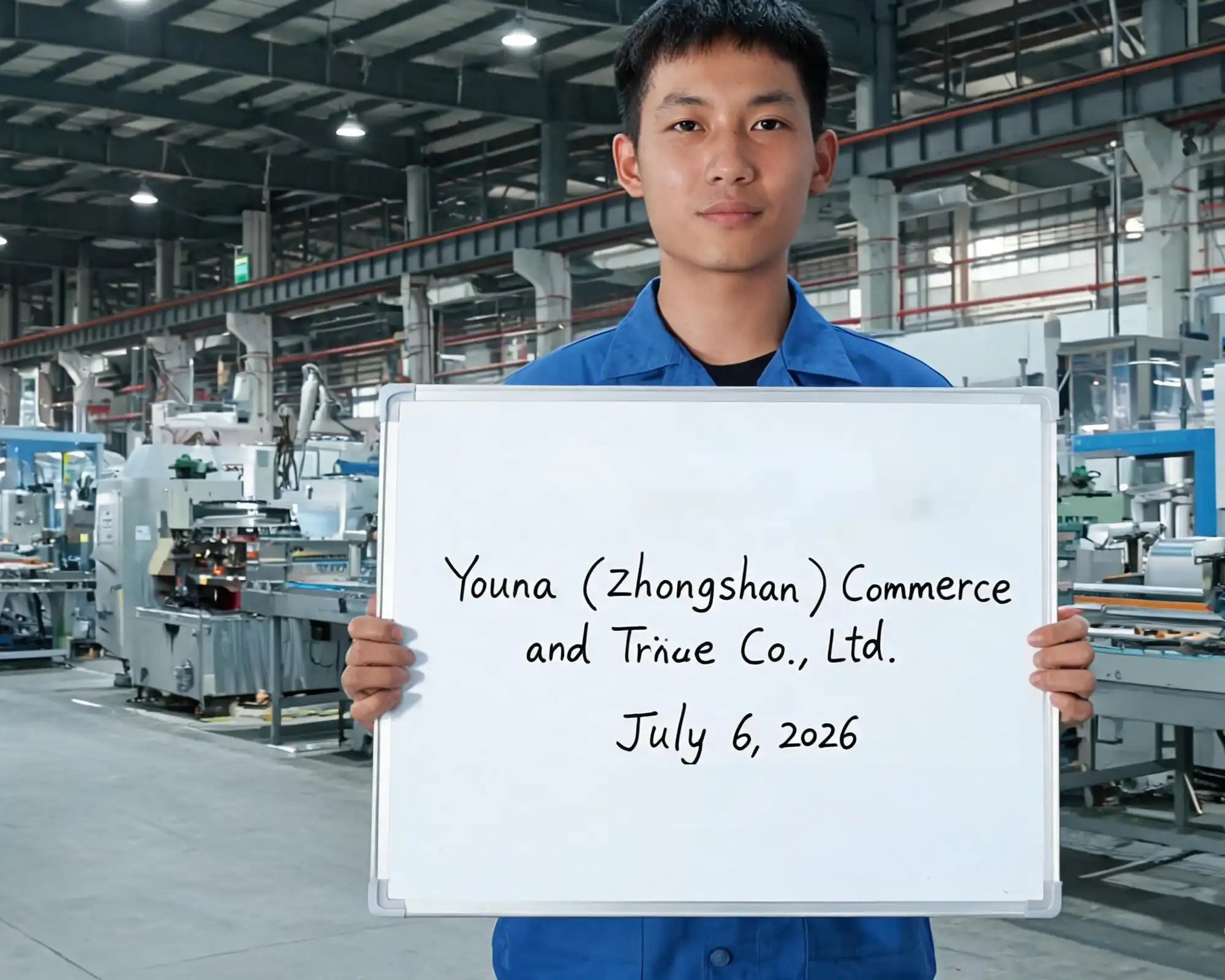
A real agent operates through a registered Chinese company, and China's National Enterprise Credit Information Publicity System (gsxt.gov.cn) is the official public registry where the business licence and registered scope can be checked for free, by you, from your desk. The method is identical to checking a factory, and our article on how to verify a Chinese company's business licence documents it step by step. The object differs, the method does not. An agent who resists giving you a licence number to check has failed the cheapest test in this article.
A named person at a real address, on video
You should be able to get a full name, an address, and a willingness to walk you through the office on a video call. This is not about the office being impressive: a named person showing you where they actually work, on camera, is much harder to fake than a polished website and much easier to hold accountable later.
Payment structure that protects you
The strongest structural protection a small buyer can have: pay the factory directly, and pay the agent's fee separately. If the agent must route the money, you see the factory's own invoice for the factory's own price; an agent who insists on being the only payment channel with no invoice trail is a red flag, not a convenience. Our article on payment terms that keep leverage on your side covers the mechanics.
References you can actually call
Ask for reference buyers in your category, then ask the reference the one question that matters: "tell me about an order that went wrong." A reference who can only recite the good times is lucky or scripted. A reference who says "yes, the second shipment was late, and here is what the agent did about it" is telling you the truth, and the truth is what you are buying.
A real inspection report from a past order
Ask to see one, with the buyer's name blurred. A real report has specific dates, carton counts, findings, and photos of flawed samples; a template has none of that, and the difference is visible in ten seconds.
Apply this list to us
Fair is fair, so here is what I would hand over: our company's registration details for you to check in the public registry yourself, my full name and our office in Zhaoqing, Guangdong, on a video call, the factory invoice on every order where the factory bills directly, reference buyers you can contact, and a real inspection report with the client's details masked. What real client feedback looks like, including the unflattering parts, is on our client feedback page. Run the checks; that is the point of publishing them.
04 The Interview: Questions That Separate Agents From Brokers
With a shortlist in hand, the interview does the sorting: four question families, plus answers that should end the conversation.
Capability questions
Category experience, in years and product families, not adjectives. And the question that cuts deepest: who physically goes to the factory, how often, and what do they actually do there? "We have a team covering the region" is not an answer. "I go myself, and here is what I check" is. An agent who never leaves the office is a broker with better manners.
Conflict questions
Do you take anything from the factory side, commissions included? Will I see the supplier's own invoice? Ask both, plainly. You want to hear either "you pay the factory directly" or "you see the factory invoice," and an unhesitating "no" to hidden factory-side money.
Consequence questions
What happens if the goods fail inspection after the deposit is paid? Who pays for rework, who pays for the delay, and who tells you first? An agent who answers these questions in detail before you have paid anything is showing you how they behave under pressure, and one who answers vaguely is showing you the same thing.
Boundary questions
"What will you not do for a client?" The honesty test. An agent who claims to do everything, for everyone, in every category, has no specialty and no judgment. I will not, for example, pretend an order is too complex to inspect, and I will tell a buyer when their product needs compliance work I cannot do for them. Boundaries are a feature.
Fee questions
Fees deserve their own conversation, and how China sourcing agents charge, including how we charge, is broken down openly in our agent cost guide. In the interview, what matters is not the number but the structure: one fee, stated plainly, with the factory invoice visible underneath.
Answers that should end the conversation
No licence to check. An instant quote before anyone has understood your product. Refusal of independent inspection. Blocking your direct contact with the factory. Payment only to a personal account. Any one of these, and the interview is over.

A small trial order in progress - how a real agent earns the next order
05 The Small Trial Order: How to Audition an Agent
You cannot interview your way to certainty; the only test that counts is a real order, and the smart move is making the first one deliberately small.
Make it real, not ceremonial
A ceremonial trial is a sample request the agent knows is a test. A real trial is a genuine order with a genuine deadline, small enough that failure stings but does not wound. Every first order is an audition anyway, which is exactly the point.
What to measure
Three things, and none of them is the price:
- Speed when your message is unclear. Anyone answers a clear question. Watch what happens when you send a vague one and they have to ask back.
- Bad news, early or late. Something will wobble in a first order, a delayed sample, a color that came out wrong. An agent who tells you the day it happens is an asset. An agent who tells you after the container is loaded is the story you are trying to avoid.
- How specific the inspection report is. Dates, counts, findings, photos. Not a paragraph of reassurance.
What a fair trial looks like
Be a fair client during the trial: send your brief in one piece, answer questions promptly, pay on the agreed terms. An audition you fail as a buyer tells you nothing about the agent, and the trial itself should be a small order over a realistic timeline, not a rush job designed to make anyone fail.
If it goes well
Scale up gradually, with a slightly bigger commitment, and keep the checks running: invoice visibility, inspection reports, response speed. Trust that survives a growing order size is the only trust worth having.
If it goes badly
Salvage what you can, document what failed, and treat the loss as the cheapest lesson in sourcing. Most buyers who import well for years had one bad small order at the start and learned from it while the numbers were small and the habits were forming.
06 Common Traps in the Hiring Stage
Where buyers actually get burned, in practice, is rarely exotic. It is these five traps, plus one situation nobody writes about.
Personal accounts and shells
Payment requests to a personal bank account, or to a company that is not the company on the licence you checked, are the classic pattern. Company-to-company payment, invoice matching the licence, is the baseline; anything else needs a reason in writing before money moves.
The instant quote
A number offered before the product is understood is not a quote, it is bait. Real pricing follows a real brief, factory conversations, and usually a sample. If the first reply contains a precise price and no questions, keep looking.
References that turn out to be friends
References need to be verifiable buyers, people with a business and a shipment history. When you call, ask for details only a real client would know, and ask the "what went wrong" question. A reference who has never had a problem with anyone has never shipped anything.
The lowest-fee trap
The agent with the conspicuously lowest fee is not the cheapest option: the fee is where the visible price is low, and the invisible price is somewhere else, usually in the factory's invoice. How to read a low fee is covered in our agent cost guide.
Being blocked from the factory
Managed communication, where the agent translates and coordinates, is fine and normal. Prevented communication, where you are never allowed to know which factory made the goods, is not. You should always know your factory's name, see its licence if you ask, and be able to video-call at the audit stage. For the wider world of supplier fraud, how to spot fake China suppliers covers the patterns.
You already have an agent, and you recognize these
This is the part nobody writes about, and it matters, because switching is where unhappy buyers lose the most money.
Start with a written status request to your current agent: every open order, its production stage, what has been paid, and who owns the tooling and samples. Get that in writing before you signal that anything is changing. Tooling and sample ownership in particular is where outgoing agents quietly hold leverage, and a single email confirming "the molds belong to the buyer" prevents an argument later. Again, this is commercial experience, not legal advice; for contract specifics, talk to a lawyer.
Then do not switch everything at once. Move the smallest live order first, and overlap the two agents for one order if you can: the new agent learns your products while the old one finishes the run, and you see both under real conditions. Never hand over a mid-production order without a written handover; mid-run is the worst moment to become a stranger to your own supplier.
A buyer I now work with switched exactly this way: she kept her outgoing agent on the running order, gave me the smallest new one, and compared our inspection reports and response speeds for a full order cycle before moving the rest. It cost her some patience and saved her the mid-run handover she was afraid of. That is the whole method, and you are allowed to use it on me too.
07 Frequently Asked Questions
How do I know if a China sourcing agent is legitimate?
Three checks you can do yourself, from your desk: run the company's business licence against China's public registry, get a named person to walk you through their real office on video, and call reference buyers in your product category. Legitimacy is verifiable evidence, not a polished website, and an agent who makes any of these three checks difficult has answered the question for you.
Should I pay the agent or pay the factory?
The safest structure for a small buyer is to pay the factory directly and pay the agent's fee separately, or to see the factory's own invoice so the factory's price is visible. If an agent insists on being the only payment channel with no invoice trail, treat that as a red flag, however convenient it sounds.
Can I use a sourcing agent for a small first order?
Yes, but say your order size up front. An honest agent will tell you if your order is too small for their model rather than take the work and under-serve it, and an agent who never turns down any size of order is telling you something about their model too.
What should I ask a sourcing agent before hiring?
Four question families: capability (who physically goes to the factory, and how often), conflict of interest (whether they take anything from the factory side), consequences (what happens if goods fail inspection after the deposit), and boundaries (what they will not do for a client). Fee questions matter too; the fee structures are covered in our agent cost guide.
How do I switch sourcing agents without losing my orders?
Get everything in writing from the outgoing agent first: order status, tooling and sample ownership, and open payments. Overlap the two agents for one order if possible, and move the smallest live order first. Never switch in the middle of a production run without a written handover.
Is it safe to find a sourcing agent on Alibaba or LinkedIn?
Both are finding channels, not proof. A listing tells you an agent exists; it tells you nothing about licences, references, or payment structure. Use them to build a shortlist, then run the same vetting you would apply to any other candidate.
08 Where This Leaves You
The path, in one breath: write the one-page brief, pull candidates from referrals and fairs rather than ads, demand evidence instead of promises, run the interview with consequence and boundary questions, audition the finalist with a real small order, and if your current agent is failing you, switch in writing, smallest order first, with overlap.
None of this is fast, and none of it needs to be. A first order placed with a properly vetted agent beats a fast order placed with an impressive website, every time. And every check in this article applies to me: I am Karsa, I work from Zhaoqing in Guangdong, our company is registered in Zhongshan, and you are invited to run the licence check, the reference calls, and the trial order before trusting me with anything that matters.
Send me your one-page brief on WhatsApp at +86 19898484442, or through the contact form, and judge my first answer against the standards in this article. We charge a commission of 5 to 15 percent of the order value, set by order complexity and order size, no hidden fees, and the factory invoice is visible on every order. For more depth on what we cover, our China buying agent service and product sourcing service pages are the place; if your product is outside what we do well, I will tell you.

Karsa has been helping e-commerce sellers and businesses source products from China since 2016, serving clients from 23+ countries.
 WhatsApp Karsa
Find Karsa on Social Media
Follow for sourcing tips, factory insights, and product updates from China.