
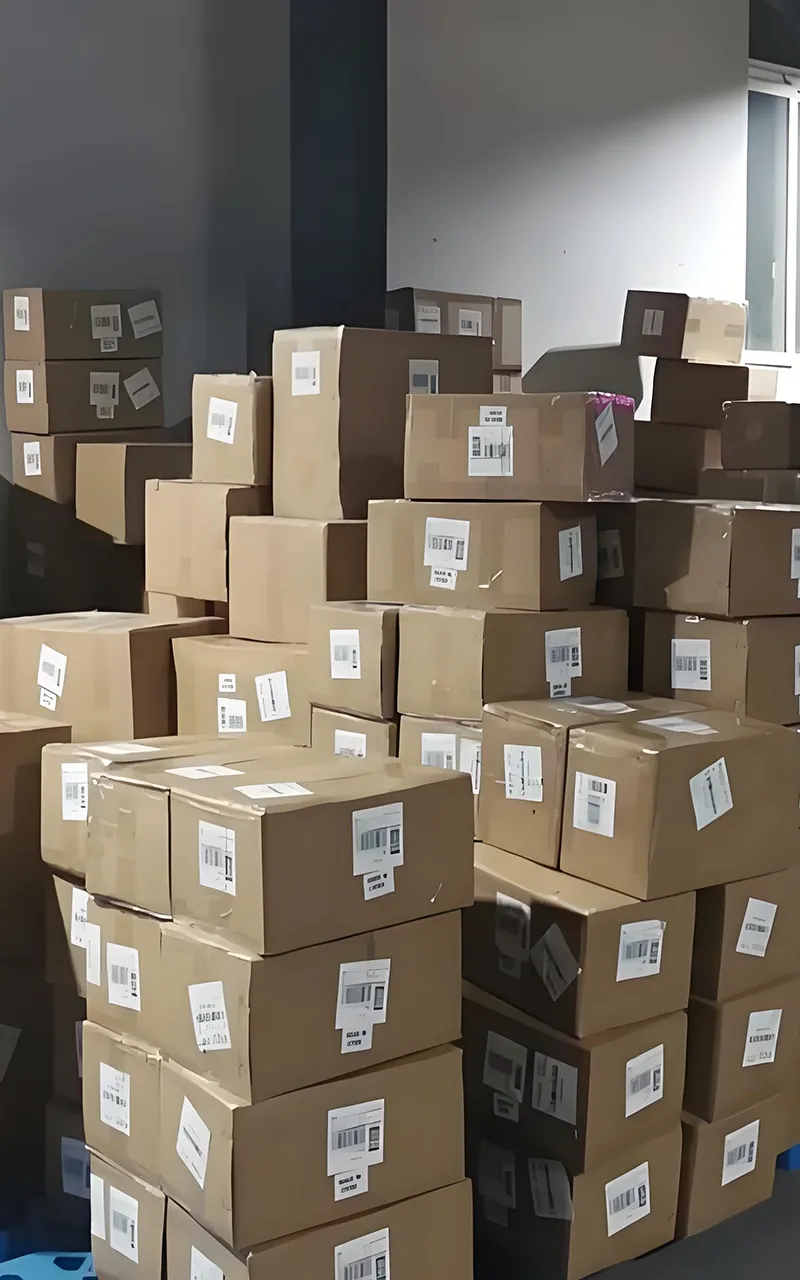
From January 1, 2026, Amazon stopped offering prep and item labeling services for FBA shipments in the US store. The work still has to happen, labels on every unit, bags to spec, cartons that pass Amazon's checks, and it must be finished before anything ships. And if your products are made in China, the place with the labor, the space, and the factory next door is China.
I run a prep line in Zhaoqing, Guangdong. My team labels, bags, wraps, and cartons Amazon-bound goods every week, and this article is the checklist we work from. Every rule below comes from Amazon's own help pages; check each one against Seller Central yourself. If you are new to importing altogether, our complete guide to importing from China starts further back; this article assumes you have a product, a supplier, and the question of how it becomes FBA-ready.
What you get here: the prep rules with their sources, bundles and sets explained properly, an honest China-versus-US-prep-center comparison, a step-by-step walk through my prep line, and the rejection traps that actually happen. Plenty of checklists online quote specs Amazon never published; nothing here works that way.
01 What FBA Prep Means, and Why It Moved to China
The one-paragraph version for your first shipment
FBA prep is everything done to your goods between the factory and the fulfillment center door so Amazon will receive them without complaint: FNSKU labels on every sellable unit, poly bags or bubble wrap where needed, bundles built and labeled as single sellable units, cartons packed to the case-pack rules, measured weights and dimensions, and box labels matching your shipment plan. FNSKU is the barcode Amazon assigns to each product you sell; every unit needs one so the fulfillment center knows it is yours.
What changed on January 1, 2026
For years, a US-store seller could ship goods into FBA as they came from the factory and pay Amazon to prep and label them on arrival. That option ended. Amazon's FBA Prep Service help page states that from January 1, 2026, the service no longer offers prep or item labeling for FBA shipments in the US store, covering inventory entering through every inbound channel, including AWD, Amazon Global Logistics, Amazon SEND, and the Supply Chain Portal. The consequence is stated in plain words: shipments created after that date which arrive without proper prep and labeling are not eligible for reimbursement if damaged or untraceable. Amazon's stated alternatives: prep yourself, use a vetted service provider, or use the SIPP program where your products qualify.
At the time of writing, this change applies to the US store. Other marketplaces have their own pages, and rules move without notice, so treat Seller Central as the source of truth and check your store's help pages.
Why that lands on China
For goods made in China, prep now logically belongs before export, at the source. The goods are already here, the labor that labels and re-bags them is here, and, the part I care about most, the factory that made them is here. A labeling defect found in Guangdong is fixed by the people who caused it, while they still own the problem. The same defect in a US warehouse is somebody else's awkward afternoon and your rework bill.
The two types of reader this guide serves
If this is your first FBA order, every term is explained as it appears, and the step-by-step section tells you what files to send. If you already sell and have been pricing US prep centers, the comparison is for you: same rules, different cost shape, and the honest cases where the US prep center still wins. Both readers end in the same place, with goods that arrive already compliant.
02 The Prep Checklist: Amazon's Rules, Cited
One caveat first: prep requirements differ by marketplace. The figures below are from the US store's packaging requirements page unless noted; the EU and Australia pages state some rules differently, in different units. Before you ship, read your own store's help pages, because Amazon updates them without notice.
FNSKU labels on every sellable unit
Every sellable unit needs its FNSKU label, scannable, flat, and covering any old manufacturer barcode underneath. An exposed old barcode beside the FNSKU is a classic receive error, because a scanner can read either one. Amazon's rules allow the manufacturer barcode in some situations, but the safe choice for a first shipment is the FNSKU label on every unit, printed from the file Seller Central generates.
Poly bags
The US store's rules for poly bags, the transparent plastic sleeve many soft goods go into: minimum thickness of 1.5 mil, completely sealed, no more than 3 inches of bag protruding beyond the product. If the opening measures 5 inches or more flat, the bag needs a suffocation warning, and the print size scales with the bag: 24 point for bags 60 inches and up in length plus width, 18 point for 40 to 59 inches, 14 point for 30 to 39 inches, 10 point below 29 inches. The barcode must be scannable through the bag, or the FNSKU label goes outside. Adult products are the exception to transparency: black opaque bagging. Check your store's help page for the current wording.
Bubble wrap and the drop test
Bubble-wrapped products need to be tightly wrapped and taped so the product cannot slide out, with the scannable barcode outside the wrap. The US packaging page then gives the test the whole section hangs on: the wrapped product must survive a 3-foot drop test of five drops, on the base, the top, the longest side, the shortest side, and a corner. The EU page states the same test as 125 centimeters, marketplace variation in action. If a fragile product fails the drop test, or weighs over 10 pounds, or is a hazardous liquid in glass, a sharp item, or a vinyl record, the rules call for over-boxing in double-wall corrugated.
Expiration-dated goods
Expiry-dated products, supplements, cosmetics, food, get their own rules, and this is where factory packaging from China usually fails. The expiration date must appear on the primary box in 36-point font or larger and on the individual units. A lot number alone is not sufficient. The format must be DD-MM-YYYY or MM-YYYY; if the factory prints differently, the accepted fix is a correction sticker. Wording varies by marketplace, so check your store's help page before committing a print run.
What Amazon refuses outright
Marketing inserts: pamphlets, pre-priced labels, price tags, anything promotional inside or on the unit. Case-packed goods must carry a single SKU in a single condition, equal quantities per carton, with the outer-case manufacturer barcodes removed or covered; the AU and EU pages state a case-pack limit of 150 units, marketplace-specific. And unplanned prep is not free: EU Seller Central guidance states that items not prepped to requirements are charged for unplanned prep at the fulfillment center. In the US store after January 2026 the exposure is worse: unprepped inventory that arrives damaged or untraceable is not eligible for reimbursement.
03 Bundles, Sets, and Multi-Pack Prep
Why bundles are the highest-margin prep job and the easiest to get wrong
A bundle, several products sold together as one listing, is one of the best margin moves a small seller can make: components are cheap separately and the set is worth more together. It is also the prep job most often done wrong, because a fulfillment center does not know your bundle is a bundle. To the receiving dock it looks like loose items in one bag, and loose items get split and lost into other stock.
Sold-as-set labeling: how set labels stop the split
The fix is a specific label. Amazon's packaging guidance provides "sold as set" labeling, with "do not separate" wording, precisely so a fulfillment center does not break your multi-pack into components. The set gets one FNSKU, the one for the bundle listing, and the label tells every person and machine handling it that these pieces are one sellable unit. A properly built bundle goes into one bag or shrink set with the set label and bundle FNSKU outside, and it is received as one unit.
Combining components from several factories into one sellable unit
Here is the part that favors China: bundle components rarely come from one factory. The base product comes from one supplier, the accessory from another, the insert from a third. My line receives all three, checks each, assembles the set, and labels it. In the US, that means three shipments converging on a warehouse far from any of the three factories. Here, the set is built where the components were made, and a component that arrives wrong goes back to the factory that made it, not into your bundle.
04 Prep in China vs a US Prep Center: The Honest Comparison
So where should the work happen? Here is the structural argument, then the honest counter-case.
The two-handling problem
Goods that route through a US prep center are handled and paid for twice. The shipment moves from China to the prep center: one freight leg, one customs entry, one receiving. It is then prepped, relabeled, and moved again to the fulfillment center: a second freight leg, a second appointment. Every carton is touched by two teams, and every correction happens at arm's length from the factory that caused it. Goods prepped in China move once, from the prep line to the fulfillment center, under one quote.
Rework at the source
When my team finds a defect on the prep line, the factory that made it is a truck ride away, often the same day. The conversation happens in the factory's language, over a sample both of us can hold. In my experience this is where China prep earns its keep: not the label price, but the defect fixed before it becomes your problem. The same defect in a US warehouse becomes a photo, an email, and a reorder.
Labor and cost structure
Same rules, different cost shape: the label requirements are identical wherever the work happens, and the difference is the cost of the hands doing it and where the correction loop runs. For what stacks up on the US side, read the hidden costs behind a factory price. For what working with a China agent costs, that is its own guide; this article deliberately contains no figures.
When a US prep center still makes sense
Honesty cuts both ways. If you run FBM inventory alongside FBA, a US warehouse holds both. FBA returns come back in the US, and a US prep center can refurbish them to stock. If you sell across multiple channels, a US 3PL serves all of them from one location. And if your goods are already in the US, China prep is not an option; the freight already happened. None of those cases is served by my line, and a US partner is the right call for them.
The comparison table
| Prep in China | US prep center | |
|---|---|---|
| Handling of your cartons | Once, from factory to fulfillment center | Twice, prep center in the middle |
| Freight legs | One, direct to FBA | Two, China to prep center, prep center to FBA |
| Where rework happens | At the source, factory nearby | Far from the factory that made the goods |
| Speed to sellable | Prep runs before export, goods arrive ready | Prep runs after arrival, plus a second leg |
| Best fit | China-sourced goods, first inbound, bundles from several factories | FBM, returns processing, multi-channel, goods already in the US |
05 How My Prep Line Works, Step by Step
This is the actual sequence on my floor. Your side has three deliverables, and I will flag them as they come up.
Receiving and counting
Your goods arrive from the factory, or from several factories, and the first job is counting what arrived against what was promised: carton count first, then units per carton against the packing list. Short counts and substituted cartons surface here, before a single label is printed, the cheapest moment to find them.
Inspection before prep
Prep on top of a defect is a defect with a label on it, so we inspect before we prep: a sample-based check of the goods, function, appearance, quantity, packaging condition, at the level agreed for the order. The method and full checklists live in our pre-shipment inspection checklist, the service detail on our QC inspection service in China page. The prep point is simpler: nothing moves to the labeling bench until it has passed.
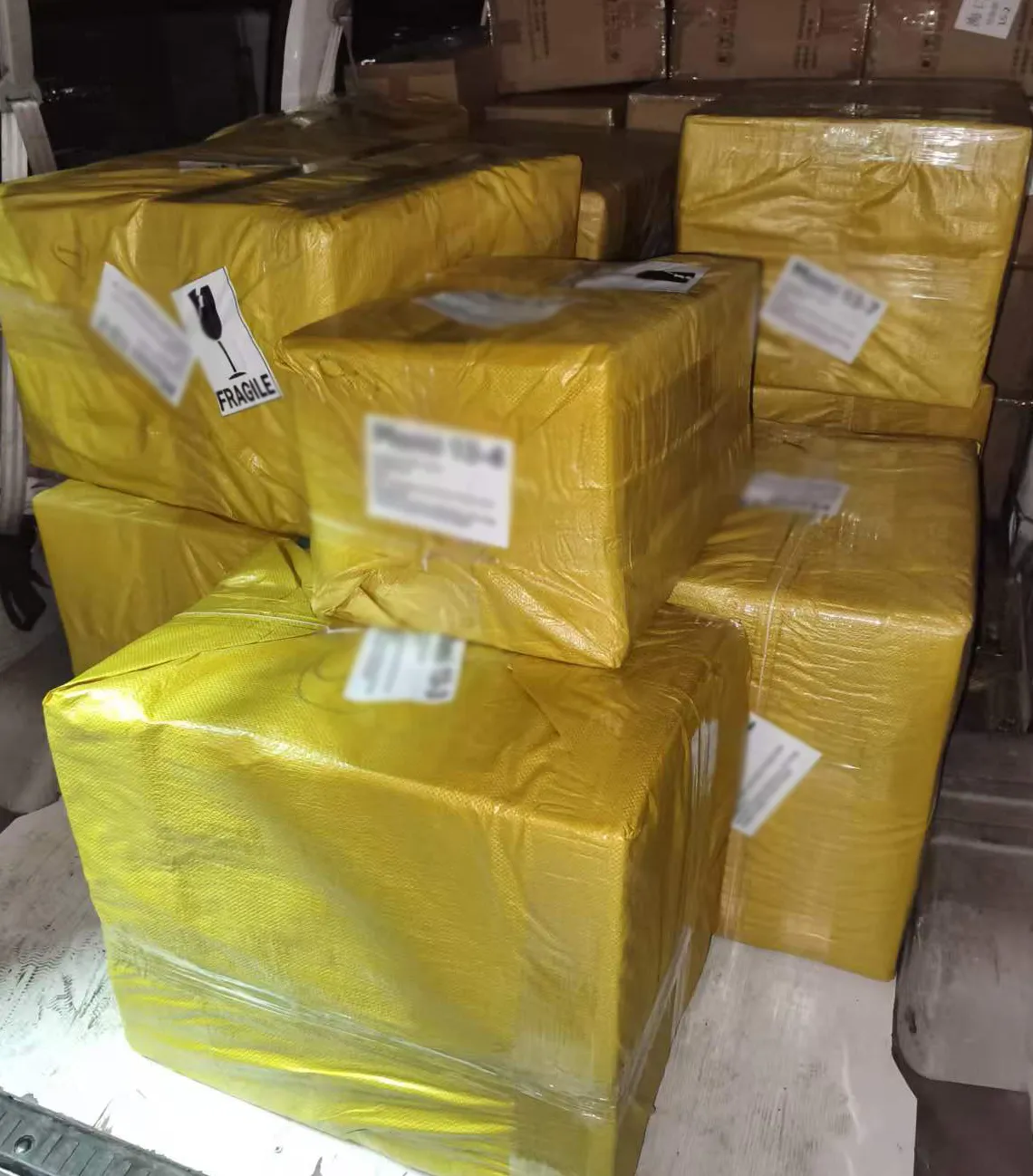
Labels printed from the seller's own Seller Central files, applied as a fixed step on the line.
The prep line
Then the physical work, in order: FNSKU labels printed from your label files and applied to every unit, old barcodes covered; poly bags and suffocation warnings where needed; bubble wrap taped to survive the 3-foot, five-drop test; bundles assembled and set-labeled; cartons built to the case-pack rules; and the step that saves the most trouble later, weights and dimensions measured on a scale instead of copied from the factory's estimate. Estimated dimensions are how a listing ends up with the wrong size tier and the wrong fees on every unit you sell.
Carton labels and shipment data
Your Seller Central shipment plan generates box labels; my side prints and applies them, and builds the carton detail so each box matches the plan exactly. A mismatch between physical cartons and shipment data is a receive problem at the dock, even when every unit inside is perfectly labeled.
Who provides what
Your list is short and digital: the shipment plan in Seller Central, the FNSKU label files, and the box label files. My list is everything physical: collection, counting, inspection, labeling, bagging, wrapping, bundle assembly, carton build, measurement, handover to freight. If you can upload three files, I can run your first prep.
06 Getting the Goods Into FBA: Routes and Appointments
Once the goods are prepped and cartoned, they have to get in. This section is a handoff, one screen on the routes and the one decision to make early; the detail lives in the guides it links to.
Express, air, or sea to the fulfillment center
Express courier suits small first shipments; air is faster and dearer; sea is the volume default once restocks are regular. That is the honest directional version; real numbers by mode and lane are in our sea freight costs and transit times from China guide. One duty-planning note: tariff classification belongs in the freight conversation, not after it; the 2026 tariff guide for US-bound goods covers that ground.
DDP to FBA: the one-quote route
Delivered Duty Paid, one quote covering freight, clearance, and duties to the fulfillment center, is the route most of my FBA clients settle on, because it collapses the journey into one accountable price. Before booking, confirm the customs route, who acts as importer of record, and how the entry is filed, exactly as our full guide to DDP shipping from China walks through.
Why you want the fulfillment center assignment before cartons are built
Amazon assigns receiving fulfillment centers when you build the shipment plan, and a split assignment divides your cartons across destinations: more legs, more appointments, more cost. Build the plan first, see the assignment, then let me build cartons to match. Cartons built before the assignment exists is the classic self-inflicted split.
The delivery appointment and what happens at the dock
Inbound deliveries run on appointments, and the freight leg books them. At the dock, carton labels are scanned against the shipment plan and anything noncompliant gets flagged. That is the moment everything here was preparation for: label correct, case-pack correct, data matched, receiving is quiet, and quiet is what you want.
07 Why Amazon Rejects Shipments: The Traps That Actually Happen
Rejections are not mysterious. They come from a small set of repeat offenders, all of them preventable on the prep line.
Label errors
The wrong or unreadable FNSKU on a unit, an old barcode left exposed beside it, a label wrapped over a seam where a scanner cannot read it flat. Every one is a labeling-bench discipline issue, which is why my line prints from your Seller Central files and covers old barcodes as a fixed step, not an option.
Packaging that fails
Bags under the thickness rule, missing suffocation warnings on large openings, wrap that lets the product slide, and the big one, wrap that has never been drop-tested. The 3-foot, five-drop test is on Amazon's packaging page for a reason: the fulfillment center conveyor drop is not gentle, and a unit that fails it in transit fails it at your cost. My bench tests wrapped samples from every new product line.
Case-pack mismatches
A carton supposed to hold one SKU holding two, unequal unit counts across cartons, or outer-case barcodes left scannable. All three break the case-pack rules cited earlier, and all three stay invisible until the dock scan, the expensive place to discover them.
What a rejection costs, structurally
The shape of the damage, without figures: unplanned service charges when the fulfillment center fixes what it can; no reimbursement cover for unprepped inventory that arrives damaged or untraceable after the January 2026 change, per Amazon's help page; and the quiet cost, weeks of restock delay while cartons sit in problem-solve. A rejected shipment is not just a fee. It is your listing going dark while competitors keep selling.
08 Frequently Asked Questions
What is an FBA prep service in China?
A team in China that takes your goods from the factory and makes them Amazon-compliant before export: FNSKU labeling, bagging and wrapping to Amazon's packaging rules, bundle assembly, carton build to the case-pack rules, measured weights and dimensions, and handover to freight. The work matches a US prep center's; the location changes who fixes defects and how many freight legs you pay for.
Do I have to use one of Amazon's vetted prep providers?
No. Amazon maintains a directory of vetted providers in Seller Central, and using one is an option, but since January 2026 the requirement is that goods arrive prepped and labeled, not that a particular party does it. You can prep yourself, use a vetted provider, an independent service like mine, or the SIPP program where your packaging qualifies.
Can my Chinese factory do FBA prep itself?
Sometimes, and it depends on the factory. The risk is focus: a factory's job is production, and labeling to Amazon's rules is bench work with its own failure modes. Ask what prep they have actually done, whether they can print from your FNSKU files, and whether they drop-test. For a first FBA order, a dedicated prep line with inspection before labeling is the safer structure.
What do I need to give the prep team before they start?
Three files, all generated in Seller Central: your shipment plan, the FNSKU label files for your products, and the box label files for the cartons. Plus the basics that let us plan: product and quantity, destination marketplace, and the packaging state the goods arrive in, bagged, boxed, or bare. Everything physical after that, collection, counting, inspection, labeling, packing, carton build, is the prep line's job.
Is it cheaper to prep in China than in a US prep center?
Structurally, usually yes, not because of any single price. You handle the cartons once instead of twice, run one freight leg instead of two, and the correction loop runs at the factory that made the defect. When those structures do not apply, FBM, returns processing, multi-channel, goods already in the US, a US prep center is the better answer.
How long does prep take in China?
Directionally, hedged as my own experience rather than a promise: a first run of a new product takes longer, because every label, bag, and carton is set up for the first time, while repeat runs move faster because the setup exists. What moves the needle most is not line speed but your three files arriving complete, so book your shipment plan early.
If you want this done on your goods, the next step is small: send your product list and destination marketplace on WhatsApp at +86 19898484442, or send your product list for a prep plan, and I will come back with a prep plan and a shipping route side by side. What we run in detail is on our China FBA prep service page; if you are earlier in the journey, finding the product and factory, our Amazon sourcing agent service is where that lives. I am Karsa; the line runs from Zhaoqing, Guangdong, our company is registered in Zhongshan, and the first thing I will ask for is the three files.

Karsa has been helping e-commerce sellers and businesses source products from China since 2016, serving clients from 23+ countries.
 WhatsApp Karsa
Find Karsa on Social Media
Follow for sourcing tips, factory insights, and product updates from China.