
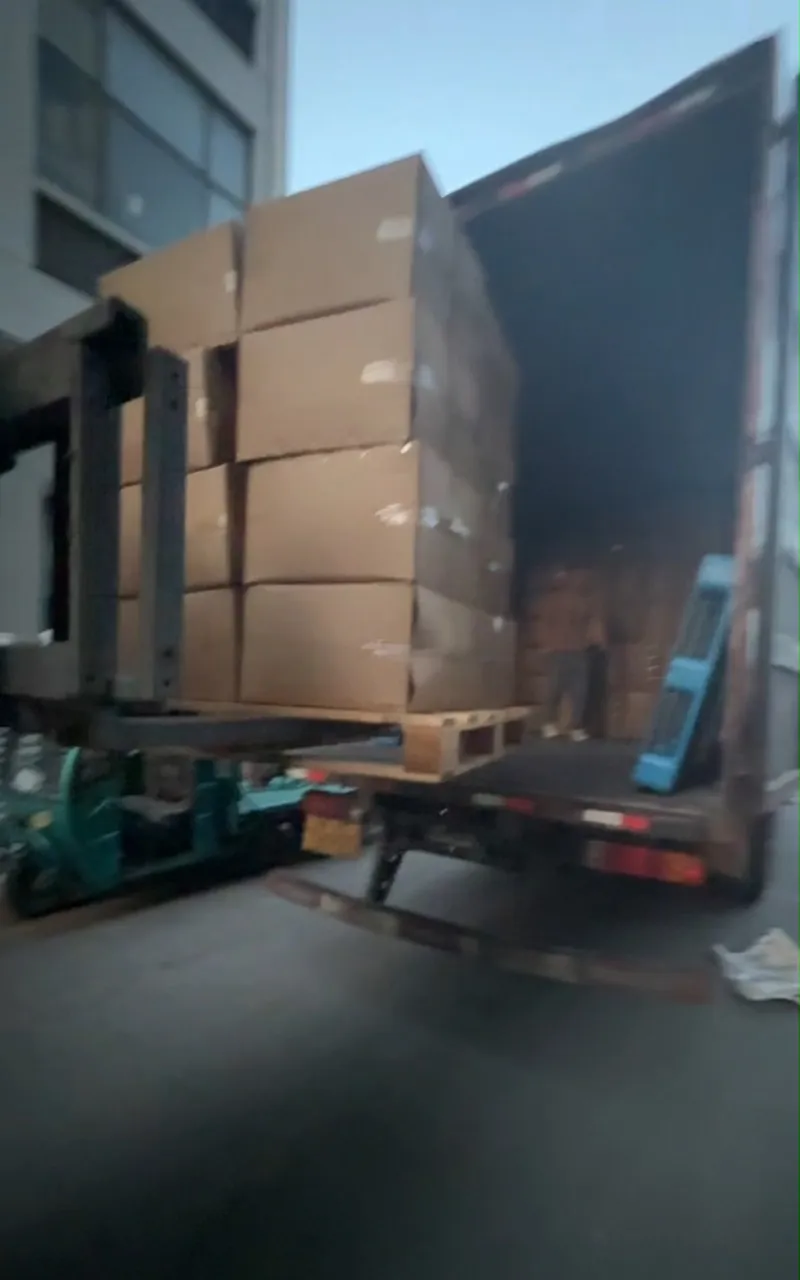
The most expensive mistake in this decision is not booking the wrong shipping mode. It is comparing the wrong two numbers. The LCL quote in your inbox and the FCL quote sitting next to it look like they answer the same question, but they do not. One of them is a complete price, and one of them is a partial price that grows after your goods arrive. Until you know which is which, you are choosing blind, and the gap between those two numbers is exactly where the money goes.
I am Karsa, a sourcing agent in Zhaoqing, Guangdong. Containers leave my desk every week, and my service covers both modes: I book full containers for some clients and shared-container space for others, in the same month, sometimes for the same client. I have no favorite, and I have no stake in which mode wins your arithmetic. What follows is the exact walk-through I give on WhatsApp when someone sends me two quotes and asks which one to book. By the end, you can run the call yourself with your own cargo numbers and your own two quotes.
If importing from China is completely new to you, start with the complete first-import walkthrough and come back here once you have real cargo and a real decision.
01 The Quick Answer (and Why It Is Only a Starting Point)
What FCL and LCL actually mean
FCL stands for full container load. Your cargo, and only your cargo, goes into a steel box. The box is sealed at the factory or warehouse, and you pay a flat price for the whole box whether you fill every corner or a third of it. Nobody else's goods touch yours between loading and delivery.
LCL stands for less than container load, also called shared container or consolidation shipping. Your goods ride in a container together with several other importers' cargo, and you pay for the space yours occupy, measured in CBM. CBM means cubic meter: a space one meter wide, one meter deep, one meter tall. A large dishwasher-sized carton is roughly one CBM, and a pallet of standard cartons is usually around two.
The rule of thumb the industry quotes
Ask around for the crossover point where shared-container pricing stops being cheaper and you will hear a number in the mid-teens of CBM. That is fair as an average, but the sources behind it scatter from about 10 CBM to about 18 CBM depending on the lane, the season, and which fees were counted when the number was minted. If someone quotes you one magic number with total confidence, they are quoting their own rate book, not your shipment. Current rate ranges by lane live in our sea freight guide, and they move week to week.
Why the only breakpoint that matters is yours
The honest version of the rule of thumb is this: shared-container pricing usually stops winning somewhere in the mid-teens in CBM, and your actual crossover depends on your lane, your month, your cargo's density, and your fee stack. Rates and destination charges shift every few weeks, which is why this article hands you a method instead of a number. You will learn how much cargo actually fits in each box, what the shared-container invoice really contains, and a division you can run on your own quotes in five minutes.
02 How Much Actually Fits: 20ft, 40ft, and 40ft High Cube
Before you can compare LCL against a full container, you need to know which container you are comparing against. That is a geometry question, and geometry is the one thing in this decision that does not move with the market.
The capacity table
Container internal dimensions are fixed international standards, so this table is stable planning data, not a market quote:
| Container | Internal size (approx) | Theoretical volume | Realistic planning volume |
|---|---|---|---|
| 20ft standard | 5.90 x 2.35 x 2.39 m | about 33 CBM | about 26 to 30 CBM |
| 40ft standard | 12.03 x 2.35 x 2.39 m | about 67 CBM | about 55 to 58 CBM |
| 40ft high cube | 12.03 x 2.35 x 2.69 m | about 76 CBM | about 65 to 68 CBM |
The gap between the theoretical and planning columns is real-world loading. Pallets waste corners, cartons do not tile perfectly, dunnage and bracing eat space, and some goods cannot be stacked to the roof. Plan on about 80 to 90 percent of theoretical volume, and be more conservative with odd-shaped products. When a client asks me how much fits in a 40ft container, the number I plan around is roughly 55 to 58 usable CBM for a standard box and 65 to 68 for a high cube.
Pallet math
If your goods move on pallets, count floor positions first. A 20ft floors about 10 standard US pallets (48 x 40 inches) or 11 Euro pallets, single stacked. A 40ft and a 40ft high cube floor about 20 to 21 US pallets or 23 to 24 Euro pallets. The high cube adds height, not floor: it buys you a second stacking layer or taller cartons, never more pallet positions.
Weight runs out before space
Volume is only half the constraint. Every box also has a payload limit, and a 20ft typically carries slightly more weight than a 40ft, though payloads vary by carrier and route and sit roughly in the high twenty-thousands of kilograms. Dense goods like tiles, hardware, and ceramics hit the weight limit long before they fill the walls, so a "full" 20ft of tiles may hold well under its volume capacity. Light goods like furniture, plush toys, and apparel cube out first, with weight to spare.
This decides your comparison box. If your order is dense, the LCL alternative is a 20ft, and your planning must be weight-aware, because shared-container billing has a weight rule you will meet two sections from now. If your order is light and bulky, your real question is usually LCL versus a 40ft high cube.
Sizing the order to the box
This is where a sourcing agent thinks differently from a forwarder. Instead of asking "does my order fit," work backwards. Take the carton dimensions from the factory, work out how many cartons fill one layer of the container floor, how many layers fit the height, and you get the order quantity that fills a box exactly. Ordering to the container, not past it and not half of it, is the cheapest per-unit move in the whole import cycle, because you pay for one box and use all of it. If the factory's minimum order quantity does not line up with the container math, that is a negotiation question, and matching MOQ to your real order size covers how to handle it.
03 What LCL Really Costs: The CFS Charges Nobody Quotes Up Front
This section is for the reader who has shipped shared a few times, felt the sting of the destination invoice, and suspects a full container would have been cheaper. The suspicion is often correct, and here is the mechanism behind it.
What physically happens to your cargo
LCL does not travel factory to vessel to your door. Your goods are first trucked to an origin container freight station, or CFS: a warehouse where the consolidator receives cargo from many importers and packs it all into one container. At the destination port the process reverses at a destination CFS: the box is opened, the mixed cargo is sorted back into each importer's portion, and yours is released to you. That unstuffing and sorting is called deconsolidation. Your cartons are handled at the origin CFS, loaded, unloaded, and handled again at the destination CFS, and every one of those touches is a fee. A full container, by contrast, is sealed at origin and not opened again until your end.
The fee names to expect, and the ones to challenge
An honest shared-container invoice contains, at minimum: origin CFS handling, destination CFS or deconsolidation, documentation, and a delivery order, which is the document that gets your goods released. Learn these four names, because they are legitimate and every one of them will appear.
Then there are the padding names: line items that re-describe a service you already bought, such as a separate receiving fee that the origin CFS charge already covered. When a destination invoice carries items you cannot map to any actual service, each one deserves a phone call and a request to justify it in writing. In my experience, invoices tend to shrink when you ask politely and specifically, because padding survives on the assumption that nobody reads the line items.
The 1 CBM minimum and the weight rule
Two conventions catch first-time shippers. First, most consolidators apply a minimum charge of 1 CBM, so a shipment measuring 0.6 CBM still pays for a full cubic meter. Second, LCL is billed on whichever is greater: your volume in CBM or your weight in metric tonnes. That billing unit is called a revenue ton, sometimes a weight or measurement ton. Three CBM of tiles can weigh well over three tonnes, and it will bill as more than 3. It is the same weight-versus-volume logic from the capacity section, now applied directly to your invoice.
Why the cheap ocean rate is the bait
Some quotes lead with a low per-CBM ocean number and recover the margin at the destination warehouse, where the CFS charges land after your goods have arrived and your leverage is gone. The number worth comparing is the all-in door-to-door total, in writing, before you book anything. When I book LCL for a client, I ask for the destination charges in writing before we confirm the ocean rate, and a consolidator who will not itemize the destination side in advance is telling you something useful. Shared-container fees are only one layer of the picture; the full landed-cost stack is covered in its own article.
04 The Break-Even Math: Run It With Your Own Quotes
Here is the core method. It takes five minutes, two honest quotes, and a calculator, and it replaces every rule of thumb above.
The formula in words
Take the all-in FCL quote for the box you would actually use, whether that is a 20ft, a 40ft, or a 40ft high cube, including everything door to door. Divide it by the all-in per-CBM LCL figure, where all-in means the ocean rate per CBM plus both CFS legs plus documentation. The result is your crossover volume in CBM. Below that volume, the shared container usually wins. Above it, the full container usually does.
A worked example with illustrative numbers
These are illustrative round numbers chosen to make the arithmetic visible. They are not current rates, and your quotes will differ:
- All-in 20ft FCL quote: a round 2,000
- All-in LCL figure: a round 100 per CBM
- Crossover: 2,000 divided by 100 equals 20 CBM
At those placeholder numbers, an 18 CBM shipment is usually cheaper shared, and a 22 CBM shipment is usually cheaper as a full box. Now replace every number with your own two quotes and run it again. If your cargo is light and bulky, run the same division against the 40ft high cube quote as well. The arithmetic is trivial. The discipline is insisting that both inputs be genuinely all-in, which is what the checklist below is for.
Why heavy cargo crosses sooner
Dense cargo drags the LCL line upward faster, because the weight rule converts tonnes into billable volume, and heavy shipments can also trigger density-based pricing from the consolidator. Tiles therefore cross over to a full container at a lower CBM than plush toys on the same lane. If your goods are heavy for their size, assume your personal crossover sits below whatever mid-teens number the internet handed you, and run the math with your real weight figures rather than your volume alone.
The itemized quote checklist
The division only means something if both inputs are complete. Before you compare, each quote must state: origin CFS handling and destination CFS or deconsolidation, on the LCL side; terminal handling charges at both ends, or THC, the fee for lifting the box across the pier, which the FCL quote carries as well; documentation; delivery to your door; and what happens after free storage time expires at each end. If a quote is missing a line, ask for it before booking, not after arrival. And if comparing two partial quotes is not a game you want to play at all, when one all-in door-to-door price makes sense is covered in our DDP guide.
05 When the Math Is Not the Whole Decision
The break-even division answers which mode is cheaper at your volume. It does not answer which mode is right for you, and the difference matters. These are the overrides I apply with clients after the arithmetic is done.
When LCL is still right
Keep the shared container when the order is a first run of an unproven product: you keep your cash free, and if the product flops you are not sitting on a container of it. LCL also fits when your warehouse or your cash flow cannot absorb a full box of stock, and when you need to top up inventory between your full-container cycles. First orders for small online sellers almost always start this way, and that is the correct starting move, not a mistake.
When FCL wins below the breakpoint
Three situations flip the answer even when the math says shared. Fragile or high-value cargo: a full container is sealed at the factory and touched once, while shared cargo is handled at two CFS warehouses among other people's freight. Deadlines: LCL adds dwell time at both ends, and if your launch date or your stockout clock cannot absorb it, the container is cheap insurance. And the shared-box customs risk: if one co-loaded shipment in your container gets flagged, the whole box can be held, including compliant cargo like yours. It is not a frequent event, but it is an LCL-specific one, and I have watched it eat a client's timeline while their clean goods waited on a stranger's paperwork.
The middle path nobody tells small buyers about
Here is the option that is structurally invisible on forwarder websites. When cargo from three suppliers totals 25 CBM, the answer is neither three separate LCL shipments nor a half-empty 40ft. It is consolidating all three suppliers' goods at one warehouse near the factories and booking a single full container. You get container economics without needing any single order to be container-sized, and your goods are handled once at origin instead of three times. This is standard sourcing-agent work; if you do not work with one yet, finding a sourcing agent who consolidates is the specific skill to look for.
Under 1 CBM is not an LCL question at all
Once the 1 CBM minimum and both CFS legs are priced in, a shipment under one cubic meter is usually cheaper by courier or air than by sea. Say it plainly: if your whole order fits in a few cartons, skip this entire debate. The shared container starts earning its keep once you are shipping roughly a pallet or more.

Inspection happens before the box seals, whichever mode you book.
Inspect before the box seals
Whatever mode you book, the inspection happens before loading. Once an FCL is sealed, or an LCL is consolidated into someone else's container, damage claims become contested, because your goods traveled out of your sight among other cargo. Inspecting goods before they load is the sequence that protects you in both modes.
06 Peak Season Moves the Breakpoint
The crossover is not carved in stone. It slides with the calendar, and it slides against the shared container first.
The two crunches
Two windows tighten capacity out of China every year. The first is the late-summer-to-autumn push, when holiday season goods all move at once. The second is the weeks before Chinese New Year, when factories rush orders out before the country shuts down and every shipper competes for the same sailings. When capacity tightens, carriers favor committed volume, and small shippers feel the squeeze first.
Why LCL suffers first
Shared-container space is assembled from consolidation slots, and in peak those slots fill early. Destination CFS queues stretch as a flood of boxes arrives together, adding days, sometimes longer, at the unloading end. A confirmed LCL booking can still roll to a later sailing while the consolidator waits to fill the box. None of this is a catastrophe; all of it is time, and time does not appear anywhere in the break-even division.
What this means for your decision
If your volume sits near the crossover, the case for booking the full container strengthens as the calendar moves into peak. The risk you are pricing in those weeks is time, not just money, and a rolled shared container can cost more of it than the difference you were trying to save. In the quiet months, let the arithmetic rule. In the busy ones, lean container.
Practical timing
Book earlier than feels necessary, especially for shared space. Lock the cargo-ready date with the factory in writing before you fix the sailing, because a box held for late cargo in peak season is a box that rolls. And treat every quote as perishable: a number older than a week or two is a planning figure, not an offer. For current rate ranges and surcharge context, the sea freight guide is maintained for exactly this.
07 Frequently Asked Questions
Is LCL always cheaper for small shipments?
No. LCL is billed per cubic meter, but the invoice also carries origin and destination CFS handling, documentation, and sometimes weight-based billing. As volume grows toward the mid-teens in CBM, those per-shipment and per-CBM fees can exceed the flat price of a full container. The only reliable test is dividing the all-in FCL quote by the all-in per-CBM LCL figure.
What is the break-even point between LCL and FCL?
Most sources quote somewhere in the mid-teens in CBM, but the honest answer is that it moves with the lane, the season, and the fee stack. Run it yourself: the all-in FCL quote divided by the all-in per-CBM LCL cost gives your crossover volume. Below it LCL usually wins; above it FCL usually does.
What is the minimum CBM for LCL?
Most consolidators apply a minimum charge of 1 CBM, so a shipment smaller than that still pays for a full cubic meter. LCL is also charged on whichever is greater, volume or weight in metric tonnes. Below about 1 CBM, the fixed CFS and documentation charges usually make courier or air cheaper than sea.
How many CBM fit in a 40ft container?
Theoretical internal volume is about 67 CBM for a standard 40ft and about 76 CBM for a 40ft high cube. Real loading runs closer to 80 to 90 percent of that, so plan on roughly 55 to 58 usable CBM in a standard 40ft and 65 to 68 in a high cube, depending on pallets and carton fit.
Can I combine goods from several suppliers in one shipment?
Yes, and it is often the smartest move for small buyers. Goods from multiple factories can be consolidated at one warehouse and shipped together, either as one LCL or, once the combined volume justifies it, as one full container. This is standard sourcing-agent work and usually beats shipping several small LCLs separately.
Is LCL slower than FCL?
Usually yes. LCL cargo waits to be consolidated at an origin container freight station and sorted back out at a destination CFS, which adds handling time at both ends. FCL moves sealed from factory to destination. In peak season the CFS queues stretch further, which is one more reason the full-container case strengthens near the crossover volume.
08 Where This Leaves You
The whole method in five lines. Know your shipment's CBM and weight, measured honestly. Know which box you are comparing against, decided by whether your goods are dense or bulky. Price both modes all-in, with every CFS leg, document, and delivery charge itemized in writing. Run the division: all-in FCL quote over all-in per-CBM LCL figure equals your crossover. Then apply the overrides: fragility, deadlines, multi-supplier consolidation, and the season.
If you want a second pair of eyes on the numbers, send me your carton dimensions, total weight, and destination port on WhatsApp at +86 19898484442, and I will run the comparison with you before you book either mode. I book both, so I have no stake in which one wins. Full details of our shipping service are on the shipping page, and the contact form reaches me just as well.

Karsa has been helping e-commerce sellers and businesses source products from China since 2016, serving clients from 23+ countries.
 WhatsApp Karsa
Find Karsa on Social Media
Follow for sourcing tips, factory insights, and product updates from China.